Yes, term life insurance generally pays the full face amount, such as $200,000 on a $200,000 policy, if you die while the policy is active and no special exclusion or reduction applies. The key question is whether the coverage remains in force and whether anything changed the benefit before the claim.
What could prevent your family from receiving the amount you intended? A missed premium, an expired term, an inaccurate application, a suicide exclusion, or an accelerated benefit can matter more than the face amount printed on the policy. For a young parent protecting a household budget, understanding those exceptions is as important as choosing the right coverage.
Table of Contents
- Does Term Life Insurance Pay the Full Death Benefit
- Why Most Term Policies Never Pay Out
- Common Exceptions That Reduce or Deny Payouts
- How Exceptions Interact in Real Claims
- Payout Options Beyond the Lump Sum
- Real Examples of Full vs Reduced Payouts
- How to Ensure Your Beneficiaries Receive the Full Amount
Does Term Life Insurance Pay the Full Death Benefit
Will a young parent's beneficiaries receive the entire $500,000 term life policy if that parent dies? Usually, yes. A standard level term policy is built to pay its stated face amount as a lump-sum death benefit when death occurs during the covered term, as long as premiums are current and no contract provision changes the claim.
The Texas Department of Insurance consumer guide explains that term life insurance pays a death benefit during the policy term. For a level policy, the face amount and death benefit are generally the same. The same $500,000 policy could pay less than $500,000, however, if an accelerated benefit rider had already paid $50,000 before the insured's death.

What the face amount means
The face amount is the coverage figure written into the contract. Term insurance generally does not build cash value, so premiums do not create a savings balance that gets added to the benefit. Beneficiaries usually receive the stated death benefit, not a refund of premiums.
The full amount depends on several conditions:
- Death during the term: Coverage must still be active when the insured dies.
- Current premiums: Required payments must be received, or the policy must remain within a valid grace period.
- Accurate application: A material misstatement can lead to a claim dispute or denial.
- No applicable exclusions or reductions: Riders, early benefits, policy loans where applicable, and other contract provisions may change the amount or timing.
These details explain why the face amount is only the starting point. A lapse can leave the family with no benefit, while an earlier accelerated payment can reduce the remaining proceeds. A suicide clause or contestability issue can also affect a claim, depending on the contract and circumstances.
Families with more complex estate-planning needs should also review how ownership and beneficiary arrangements affect life insurance proceeds. The David J. Greiner Law Corp ILIT advice provides background on irrevocable life insurance trusts and their estate-planning role.
Practical rule: The face amount sets the intended payout, but active coverage and policy conditions determine what beneficiaries actually receive.
Why Most Term Policies Never Pay Out
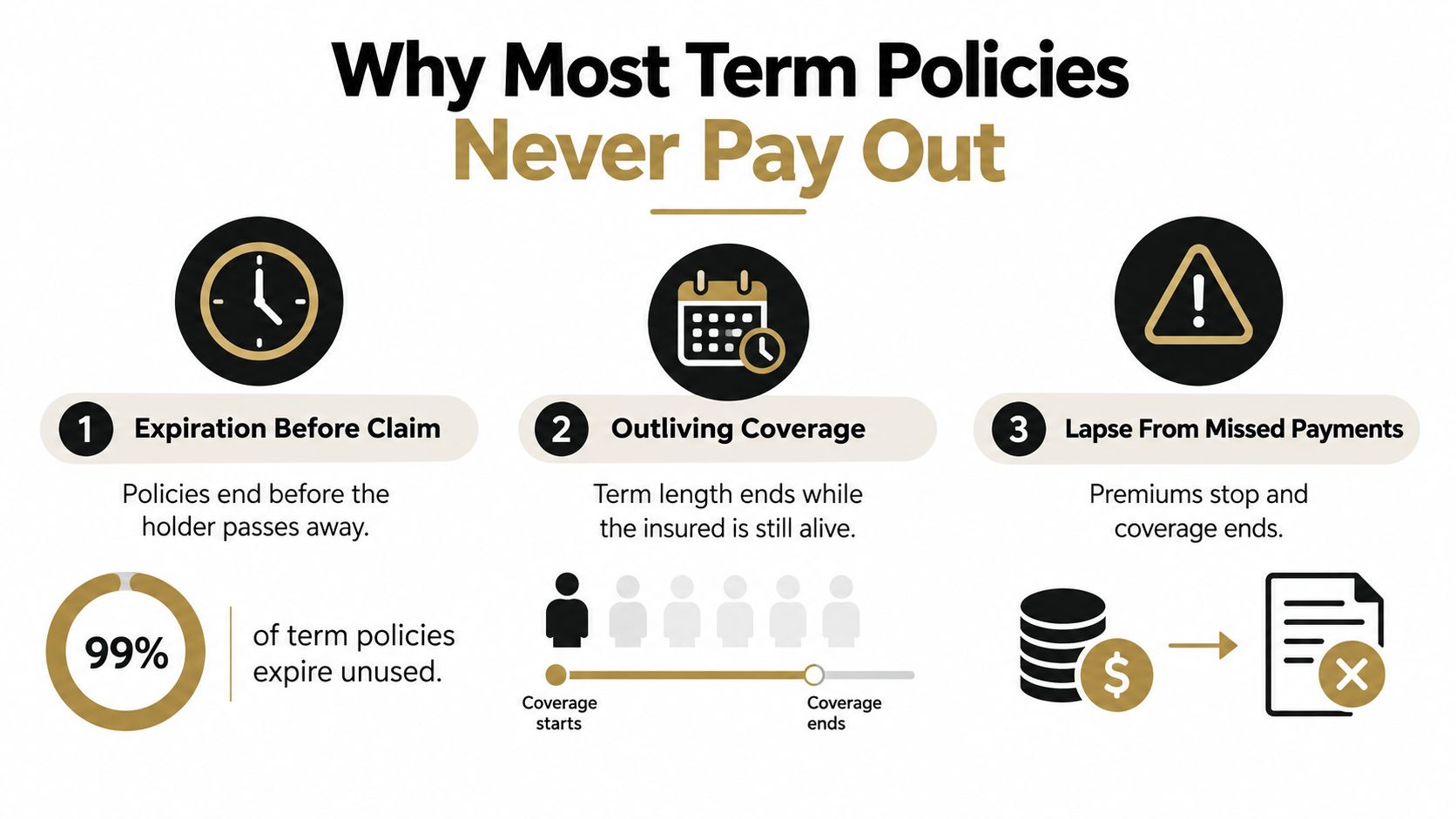
A term policy can promise a full death benefit and still never produce a claim payment. That isn't necessarily a flaw. Term insurance covers a defined period, and many policyholders remain alive when the term ends or stop the policy before death.
The policy must survive the risk
The question “does term life insurance pay full amount” only becomes relevant if the insurance is active at the time of death. If the insured outlives the term, the contract ends without a death benefit. Term insurance also normally has no cash value, so paying premiums for years doesn't create a balance that the policy returns when coverage expires.
Lapse is another important reason a policy may never pay. A lapse occurs when required premiums aren't paid and any available grace period ends. The insured may have paid regularly for a long time, but those past payments don't restore coverage after the contract terminates.
The Society of Actuaries persistency update reported total term-insurance lapse rates of 10.2% on a policy basis and 10.3% on a face-amount basis in its U.S. individual life persistency update. An earlier Society of Actuaries report covering 2004–2005 recorded lapse rates of 6.6% on a policy basis and 5.7% on a face-amount basis.
Premium changes can create a danger point
The same earlier report found shock lapse rates at the end of guaranteed level-premium periods averaging 22% for 5-year level premium term and 37% for 10-year level premium term. These figures don't predict what will happen to a particular household, but they show why policy reviews matter when a guaranteed pricing period ends.
For a family, practical safeguards include:
- Automatic payments: Use a reliable bank account or card and monitor failed transactions.
- Address updates: Make sure the insurer can send lapse and renewal notices.
- Term-end reminders: Put the expiration date on a shared calendar.
- Annual reviews: Recheck coverage after income, mortgage, marriage, divorce, or family changes.
The full benefit is available only when the policy remains in force. Keeping coverage active is the foundation beneath every other claim question.
Common Exceptions That Reduce or Deny Payouts
Could a policy showing a full face amount still pay less, or nothing at all? Yes, when a contract provision applies. The coverage number is only the starting point. Lapses, exclusions, application errors, and policy debt can change what beneficiaries receive.
Contestability and application errors
Many policies include a two-year contestability period. If the insured dies during that period, the insurer can review the original application. A material misstatement, such as leaving out a medical condition that could have changed the underwriting decision, may lead to rescission or a denied claim. In that situation, the insurer may return premiums instead of paying the death benefit.
An ordinary typo does not automatically cancel coverage. The key question is whether the information was significant under the policy and applicable law. Applicants should answer questions about health, tobacco use, occupation, and lifestyle fully and accurately rather than guess.
The suicide clause
Many policies also contain a two-year suicide exclusion. If the insured dies by suicide during the period stated in the contract, the insurer may exclude the death benefit and return premiums, subject to the policy terms and applicable law. The Super Lawyers explanation of suicide clauses describes how this provision commonly works.
After the applicable contestability and suicide periods, a valid claim generally pays up to the stated death benefit, provided the policy remains active and no other provision applies.
Lapse and policy loans
A missed premium can end coverage after the applicable grace period. If death occurs after the lapse, beneficiaries generally will not receive the face amount, even if the policyholder paid for years. Reinstatement may restore protection in some circumstances, but the family should not assume that the previous coverage continued automatically.
Policy loans involve a different issue. Traditional term life insurance usually has no cash value to borrow against. If a policy includes a cash-value component or another borrowing arrangement, unpaid principal and accrued interest can reduce the net death benefit. The insurer may pay the printed face amount minus the outstanding balance.
For a broader checklist of exclusions and claim limitations, review what life insurance doesn't cover. The practical test is simple: confirm that premiums are current, application answers were accurate, and any loan balance is understood before a claim occurs.
How Exceptions Interact in Real Claims
A claim isn't evaluated by looking only at the date of death. The insurer may examine the policy's payment history, application, reinstatement records, riders, and beneficiary information together.

Consider a household where a parent misses premiums after changing bank accounts. The policy lapses, then the owner applies for reinstatement. The insurer accepts the reinstatement, but the insured later dies while the reinstated coverage is within a contestability period. The claims team may review the reinstatement application, not just the original application, and may examine whether health information was answered accurately.
A second complication can arise if the death falls within a suicide exclusion. A policy may be active, yet a specific exclusion can still affect eligibility. If the policy had a loan or an accelerated benefit, the insurer might approve the claim while calculating a reduced net amount.
A practical claim review
Beneficiaries should gather:
- The policy contract: This shows the face amount, term dates, riders, and exclusions.
- Proof of death: The insurer normally needs official documentation before reviewing payment.
- Premium records: Bank statements and insurer notices can help clarify whether coverage was active.
- Reinstatement paperwork: Any application after a lapse may be relevant.
- Ownership and beneficiary records: These identify who can make the claim and receive proceeds.
The life insurance contestability period guide provides additional context on why early claims can receive closer application review.
A policy can therefore be active on paper but still require careful examination. The best defense is a clean application, continuous premium payments, and a current copy of the contract.
The following video may help families understand how insurers approach policy provisions and claim questions:
Payout Options Beyond the Lump Sum
Many people hear “full amount” and picture one check deposited into a beneficiary's account. A standard death benefit is often paid as a lump sum, but some policies offer alternatives. The choice can affect access to money, budgeting, and the amount remaining after an earlier benefit.
An accelerated death benefit rider may allow a terminally ill policyholder to access part of the death benefit while alive. That payment can help with medical or household expenses, but it generally reduces the amount available to beneficiaries later. The policy may also charge fees or apply other terms, so the rider language matters.
Some contracts allow installment payments instead of one immediate lump sum. Installments can create a planned stream of income, while a lump sum gives beneficiaries flexibility to pay a mortgage, settle debts, or invest according to their needs. The Guardian Life explanation of death-benefit options describes these possible differences.
Term life payout options compared
| Payout Method | Beneficiary Receives | Best For |
|---|---|---|
| Lump sum | The payable death benefit in one payment, subject to the contract | Immediate expenses, debt repayment, and flexible planning |
| Installments | The payable benefit distributed over time | Households seeking structured income |
| Accelerated benefit used before death | A portion accessed early, with the remaining benefit adjusted | Terminal illness expenses and urgent financial needs |
| Other settlement arrangement | Payments governed by the selected contract option | Beneficiaries who prefer a defined payment schedule |
The table describes payment structures, not a promise that every policy includes every option. Beneficiaries should check the settlement provisions before choosing a method.
For a closer look at beneficiary payment choices, see life insurance settlement options.
A full face amount and a full immediate cash payment aren't always the same thing.
Young families may prioritize immediate stability after a parent's death. A business owner might prefer a structure that supports ongoing obligations. The right choice depends on the beneficiary's needs, the policy wording, and whether any benefit was accessed before death.
Real Examples of Full vs Reduced Payouts
Policy language becomes easier to understand when applied to ordinary household situations. These examples are illustrative scenarios, not reported case studies.

The full payout
A married parent buys a level term policy while raising children. The application accurately discloses medical history, premiums are paid on schedule, the beneficiary designation is current, and death occurs during the covered term. The surviving spouse submits the policy details and proof of death.
With no lapse, application dispute, rider reduction, or applicable exclusion, the insurer generally pays the policy's stated death benefit. This is the ordinary result the contract is designed to provide.
The reduced payout
A professional owns coverage with a feature that permits access to part of the benefit after a terminal diagnosis. The owner uses that provision for care expenses. Later, the owner dies while the policy remains active.
The beneficiaries may receive the remaining death benefit rather than the original untouched face amount. The reduction isn't caused by a missed premium. It results from using a benefit early, so the family should review the rider before assuming the printed coverage figure remains unchanged.
The denied claim after lapse
A couple has a level-premium policy and pays reliably for years. After a job change, the policyholder's payment account closes. Notices go to an outdated address, the grace period ends, and coverage lapses. The insured dies after the lapse but before the couple discovers the problem.
The beneficiaries may receive no death benefit because the policy wasn't active at death. The Guardian Life overview of level term insurance explains that level premiums remain the same during the selected term, while coverage still ends when that term ends unless the contract provides another route.
Common term lengths include 5, 10, 15, 20, and 30 years, according to that overview. A family that pays every premium can still lose coverage when the selected term expires, so the end date deserves the same attention as the payment date.
How to Ensure Your Beneficiaries Receive the Full Amount
The strongest protection is steady policy maintenance. A few practical habits can prevent avoidable disputes and make a valid claim easier to process.
- Automate premiums and check them. Set up automatic payments, then review bank statements for failed transactions. An automatic instruction isn't useful if the account or card has changed.
- Keep the insurer's records current. Update your address, phone number, email, and payment details so you receive lapse notices and term-end communications.
- Review the contract annually. Confirm the face amount, term dates, riders, exclusions, ownership, and beneficiary designations. Store a copy where your spouse or another trusted person can find it.
- Update beneficiaries after major events. Marriage, divorce, birth, adoption, and changes in family relationships can make an old designation unsuitable. Complete the insurer's official change process rather than relying on an informal note.
- Protect application accuracy. Keep a copy of the original application and answer future reinstatement questions carefully. Ask the insurer or a licensed professional when a question is unclear.
- Understand benefit access. Before using an accelerated death benefit or any borrowing feature, ask how it affects the eventual payment.
Term life insurance isn't designed to pay merely because premiums were paid. It's designed to pay the stated death benefit when an insured death occurs during active coverage and the contract's conditions are satisfied. For many families, that makes the product straightforward, provided they monitor the details that keep the promise in force.
Coveredly offers digital term life insurance with up to $3 million of coverage and no exams for most applicants. Visit Coveredly to explore coverage options and review how the policy terms, beneficiaries, and payment features fit your family's protection plan.