You’re probably looking at Globe Life because the name is familiar, the ads are easy to remember, and the promise sounds simple. If you’re buying life insurance for a spouse, kids, or anyone who depends on your income, “simple” is appealing. The problem is that insurance ratings can feel like a foreign language.
Upon seeing a letter grade like A or AA-, there's often an assumption that the entire company must be excellent in every way. That’s not how it works. A life insurer can be financially strong and still frustrate customers in day-to-day service. That’s why understanding globe life insurance ratings means looking at two different questions at once: Can the company pay claims, and what is it like to be a customer?
This guide translates those ratings into plain English so you can judge what matters for your family’s security.
Table of Contents
- Decoding Life Insurance Ratings An Introduction
- Globe Life's Financial Strength Report Card
- Beyond Financials Customer Experience and Complaints
- Interpreting The Paradox of Globe Life's Ratings
- How to Use Ratings to Choose Any Life Insurer
- Frequently Asked Questions About Globe Life
Decoding Life Insurance Ratings An Introduction
When people hear “insurance rating,” they often think it means a general review, like a star rating for a phone or hotel. In life insurance, that’s only partly true. A financial strength rating is closer to a restaurant health grade than a customer review.
A restaurant’s health grade doesn’t tell you whether the fries taste good or whether the waiter smiled. It tells you whether the place meets standards that matter for safety. Insurance ratings work in a similar way. They’re mainly about whether the insurer looks financially able to keep promises years from now.

What a rating is actually measuring
When you buy life insurance, you’re making a very long-term bet. You pay premiums now so the insurer can pay a death benefit later, sometimes decades later. The rating is one shortcut for answering this question: Will this company likely still be standing when my family needs it?
That’s why these ratings focus on things like capital, reserves, operating performance, and risk management. They are not mainly judging how easy the website is to use or how quickly a billing issue gets fixed.
Practical rule: Treat a financial strength rating as a durability score, not a full customer experience score.
Many shoppers frequently get tripped up. They compare insurers using only the letter grade and miss the second half of the picture. A company can earn a strong grade for claim-paying ability and still create headaches for policyholders in service, communication, or complaint handling.
Who issues these grades
The names you’ll see most often are A.M. Best, S&P Global, and Fitch Ratings. Each agency has its own scale, but the basic idea is the same. Higher grades signal stronger perceived ability to meet obligations under policies and contracts.
That’s why insurer ratings matter most when your priority is family protection. If you want a broader primer on how life insurance works before comparing companies, this smart person’s guide to life insurance is a helpful companion.
A useful way to think about it is this:
| What you’re checking | What it tells you |
|---|---|
| Financial strength rating | Whether the insurer appears financially able to pay future claims |
| Customer satisfaction data | Whether customers seem reasonably happy with service and support |
| Complaint patterns | Whether problems are happening often enough to stand out |
If you remember only one thing from this section, make it this: globe life insurance ratings are not one rating. They are several signals, and each one answers a different question.
Globe Life's Financial Strength Report Card
Globe Life’s strongest argument is its financial report card. If your biggest concern is whether the insurer can pay a death benefit years from now, this is the part of the story that should make you pay attention.

The grades on Globe Life's report card
According to Globe Life’s published ratings summary, Globe Life has earned an A (Excellent) rating or higher from A.M. Best for over 50 consecutive years. The same source states that S&P Global assigns Globe Life an AA- (Very Strong) rating, and Fitch Ratings upgraded its insurance operating subsidiaries to AA- (Very High).
Those are strong grades from major rating agencies. In plain language, they suggest that Globe Life has substantial financial capacity and is viewed as a reliable payer of policy obligations.
You can think of this as a school report card where the company keeps earning high marks in the subjects that matter most for long-term stability. Not perfect in every area of business, but very solid where solvency and claim-paying ability are concerned.
What those grades mean for your family
If you own a policy, these ratings matter in a practical way. They suggest a low perceived risk of financial weakness compared with lower-rated insurers. That matters because life insurance often sits in a drawer or portal for years. Its true test may come long after you buy it.
A strong insurer rating doesn't mean you'll love every interaction. It means the company appears financially equipped to honor the contract.
For a parent buying coverage to protect mortgage payments, childcare costs, or future college bills, this matters more than flashy advertising. For a business professional using life insurance to protect a spouse or support a buy-sell obligation, it matters too. The company needs to be financially dependable over a long timeline.
Here’s a simple translation of the grades:
- A.M. Best A or higher for over 50 consecutive years: Globe Life has shown long-run financial consistency according to a major insurance-focused rating agency.
- S&P Global AA-: The company is viewed as having a very strong ability to meet obligations under insurance policies.
- Fitch AA-: Another large rating agency also sees very high financial strength.
That doesn’t answer whether the policy is competitively priced or easy to manage. It answers a narrower, very important question about staying power. If you’re comparing policy options side by side, a term life insurance rate comparison guide can help you separate financial quality from price.
Beyond Financials Customer Experience and Complaints
A strong balance sheet helps at claim time. Day-to-day service shapes everything that happens before that.
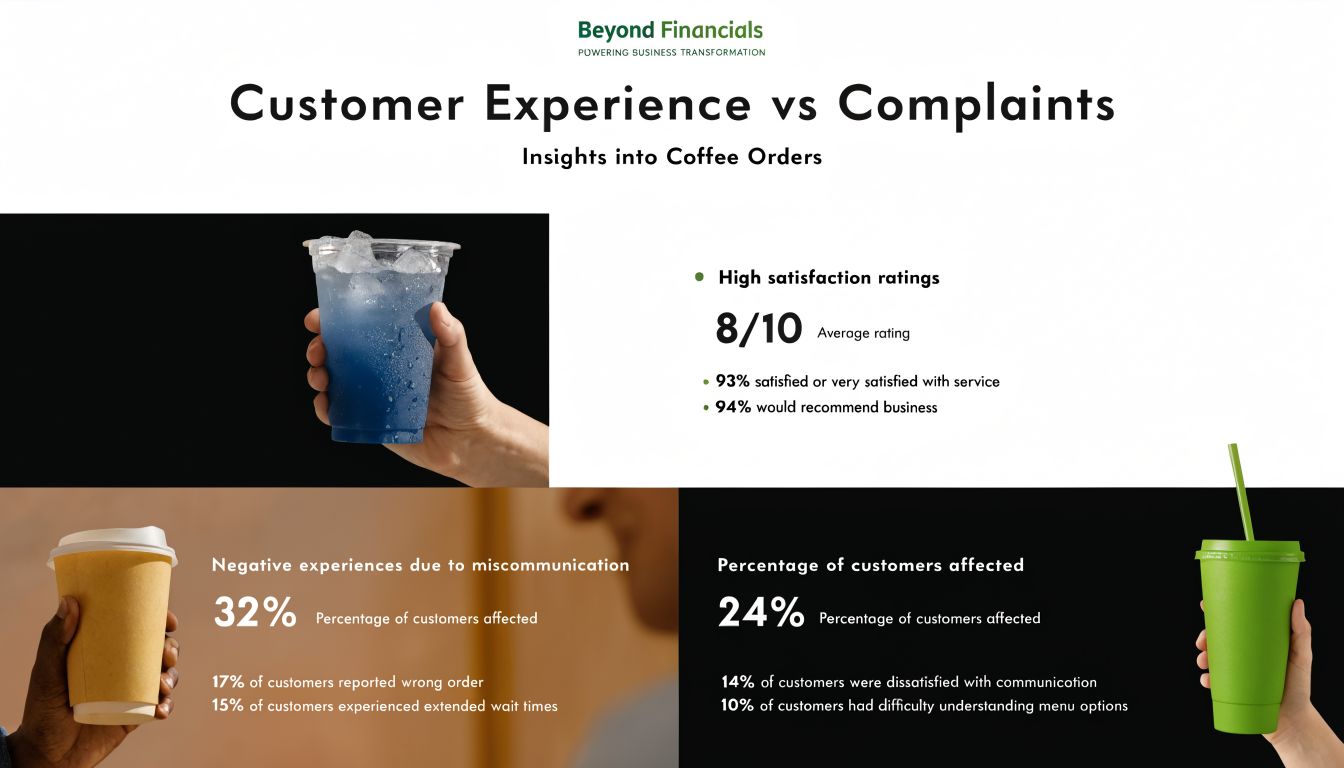
If insurer ratings work like a restaurant health grade, customer experience data works like reading the recent reviews before you book a family dinner. The kitchen may be financially sound. You still want to know whether people get clear answers, correct billing, and prompt help when something goes wrong.
That is why financial strength ratings never give the full picture for a policyholder.
The customer side of the story
Third-party reviews summarized earlier point to some encouraging signs. Globe Life appears to perform reasonably well in broad customer satisfaction comparisons, and its long-standing BBB accreditation suggests an established process for responding to complaints submitted through that channel. Verified review summaries also describe solid renewal intent among surveyed customers.
Those signals matter. They suggest many policyholders stay with the company and report a decent overall experience.
Still, satisfaction scores have limits. They often reflect how customers feel about buying and owning the policy, not just what happens during a billing dispute, a beneficiary change, or a claim.
Why complaint data matters
Complaint data answers a different question. Instead of asking, "Did customers generally feel satisfied?" it asks, "How often did problems become serious enough that people contacted regulators?"
That is a tougher test.
As noted earlier, Globe Life has drawn more complaints to state regulators than expected for its size in recent years based on NAIC complaint analysis cited in major reviews. For a shopper, that does not prove you will have a bad experience. It does suggest a higher chance of friction than the top-line satisfaction signals alone might imply.
A useful way to read these mixed signals is to separate routine satisfaction from escalation risk.
| Signal | What it means for you |
|---|---|
| Above-average satisfaction indicators | Many customers appear to find the company acceptable to work with |
| Long-standing BBB accreditation | There is an established channel for resolving some disputes |
| Higher-than-expected regulator complaint activity | Service or policy issues may be serious enough, often enough, to push some customers beyond normal customer support |
For families, that distinction is practical. Your spouse or beneficiaries are not grading Globe Life on a ratings chart. They may be trying to get a form processed, confirm coverage, or receive claim guidance during a stressful week.
So read this section of the report card the way you would read online reviews for a pediatrician. Credentials matter. So does how the office handles phone calls, paperwork, and problems under pressure.
Interpreting The Paradox of Globe Life's Ratings
Your spouse buys a policy because the insurer looks financially strong. Years later, your family needs help with a billing question, a beneficiary update, or a claim form. Those are two very different moments, and they are measured by two different kinds of ratings.
That is the key to Globe Life's mixed report card.
Globe Life’s ratings page speaks to the company's financial strength. That type of rating answers a narrow but important question: does the insurer appear able to meet its future obligations? For a life insurance buyer, that is like checking a restaurant's health grade. You want reassurance that the foundation is sound before anything else.
But a health grade does not tell you whether the service is fast, whether the order is accurate, or how the staff handles a problem. Insurance ratings work the same way. A strong financial grade can exist alongside a customer experience that feels uneven.
Why both can be true
Financial strength ratings focus on the insurer's balance sheet, reserves, and overall ability to pay claims over time. They are grading durability.
Customer-facing reviews and complaint patterns focus on a different question. What is it like to deal with this company when real life gets messy?
That split explains the apparent contradiction better than any single score can. Globe Life can look reassuring on solvency and still leave some shoppers cautious about the day-to-day ownership experience.
Policyholders do not live inside rating categories; rather, they live inside situations. An application gets delayed. A payment method changes. A beneficiary needs guidance after a death in the family. In those moments, a high financial grade is helpful, but it is only part of what your family depends on.
What the paradox means for you
Read Globe Life's ratings as two separate signals, not one blended verdict.
The first signal is financial dependability. If your main concern is whether the company appears built to keep long-term promises, the ratings support that part of the story.
The second signal is service risk. If your main concern is how easy it may be to apply, make changes, get answers, or resolve a problem, you need to weigh the complaint history and service reputation separately.
That distinction protects buyers from a common mistake. They see a strong letter grade and assume it covers the full ownership experience. It does not.
A better question is: what kind of risk worries you more? The risk that the insurer cannot meet obligations years from now, or the risk that dealing with the company may involve more friction than you want during stressful moments?
For many families, the answer is both. That is why ratings work best as a set of lenses, not a single final verdict. If you are still comparing coverage types and fit, this guide on how to choose the right life insurance policy can help you connect insurer ratings to the policy decision itself.
The practical takeaway is simple. Globe Life's stronger financial marks deserve attention. So do the signs that the ownership experience may not feel as strong. Looking at both gives you a more honest picture of what the ratings mean for your family, not just for the company on paper.
How to Use Ratings to Choose Any Life Insurer
The easiest way to avoid getting overwhelmed is to use a short checklist. Not a giant spreadsheet. Not a weekend research project. Just a repeatable way to compare insurers on the key factors.
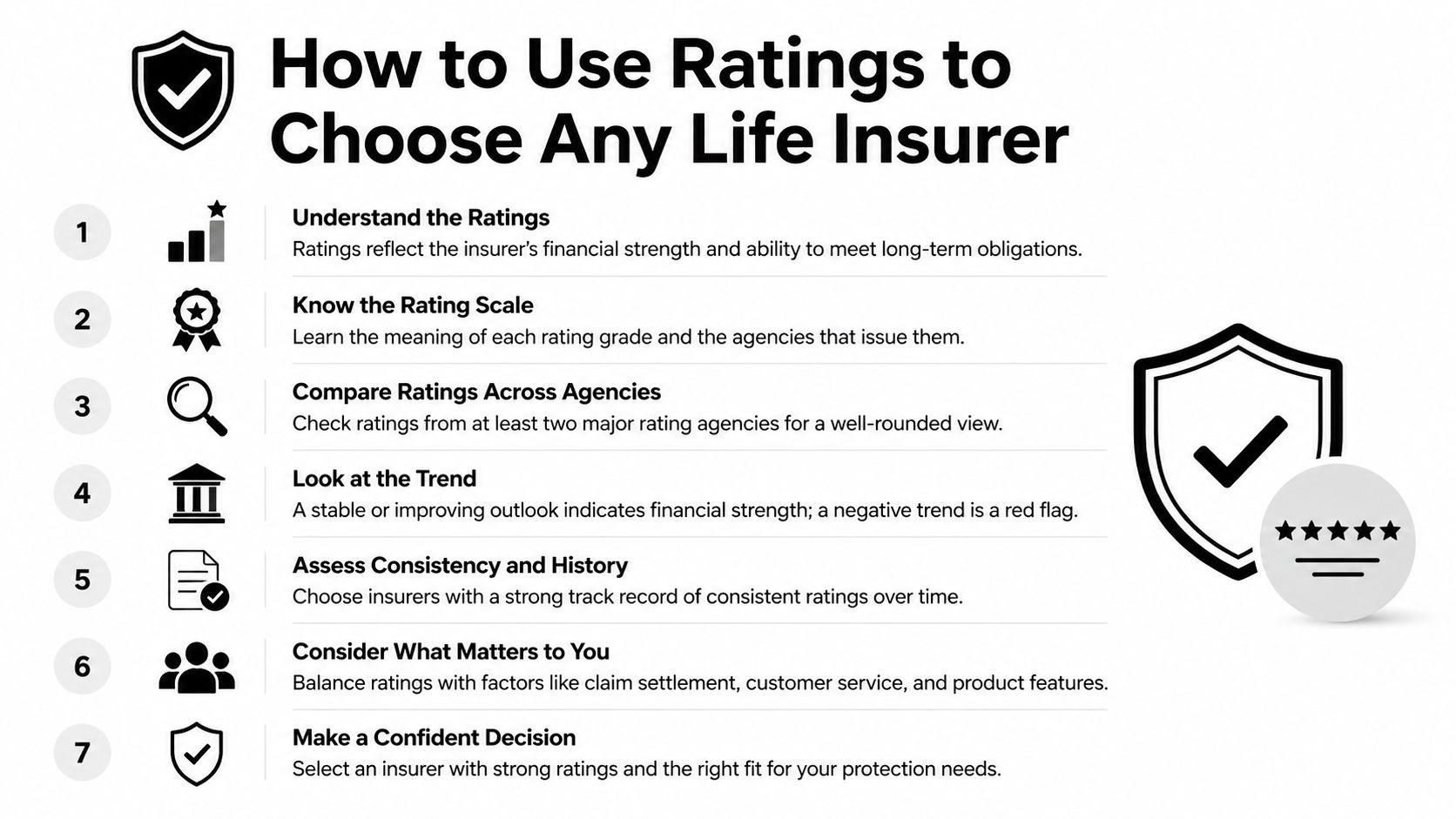
A practical three-part check
Start with the foundation.
Check financial strength first.
If an insurer doesn’t look financially dependable, stop there. This is a fundamental requirement because the policy has to be backed by a company that appears able to pay future claims.Then check complaint and satisfaction patterns.
Don’t assume a great letter grade means easy service. Look for whether complaints seem unusually high, whether customer rankings are respectable, and whether the company has a reputation for resolving problems.Finally compare policy fit and price.
A strong insurer can still be the wrong insurer for your needs if the coverage structure, premium, or application process doesn’t fit your life.
A lot of buyers reverse this order. They start with a catchy ad or introductory offer. That’s understandable, but risky. The better sequence is strength, service, then value.
A simple decision filter
Use this quick filter when comparing any carrier:
- Keep it on your list if the insurer looks financially sturdy and its customer experience signals are at least acceptable.
- Slow down if the company has a strong balance sheet but recurring service concerns. That doesn’t make it a bad choice, but it means you should read the policy details more carefully.
- Move on if pricing feels hard to justify and the customer record raises concerns at the same time.
If you want a broader framework for matching policy type and insurer to your situation, this guide on how to choose the right life insurance policy is a useful next step.
One final note. Ratings are a screening tool, not a final verdict. They help you narrow the field. After that, the best insurer is the one that combines financial credibility, manageable service risk, and a policy design that fits your family.
Frequently Asked Questions About Globe Life
Is Globe Life a legitimate insurance company
Yes. The financial ratings discussed earlier support the view that Globe Life is a legitimate insurer with recognized financial strength from major rating agencies. A scam doesn’t maintain that kind of standing with established rating organizations.
That said, “legitimate” and “best fit” are different questions. A legitimate insurer can still be expensive, limited, or frustrating for some customers.
Why do good financial ratings and negative reviews both exist
Because they measure different things.
Financial strength ratings focus on whether an insurer appears able to pay future obligations. Negative reviews often reflect customer frustration with service, communication, billing, underwriting outcomes, or policy changes. Both can be true at the same time.
A simple analogy helps. An airline can be financially stable and still have a rough customer reputation for delays or support issues. The same logic applies here.
Should you buy a Globe Life policy
It depends on what matters most to you.
If your top concern is choosing an insurer that appears financially dependable over the long run, Globe Life’s report card is reassuring. If you care just as much about smooth service and low complaint friction, you should weigh the customer-side signals carefully and compare alternatives before deciding.
A good buying decision usually comes down to three questions:
- Do I trust the insurer’s financial strength?
- Am I comfortable with the service and complaint record?
- Does this policy fit my needs at a price I can live with?
If you can answer yes to all three, the policy may be worth considering. If one answer is shaky, keep shopping.
What rating should matter most
Start with financial strength, because that’s the foundation of the promise. If the insurer can’t reliably meet long-term obligations, nothing else matters.
After that, customer experience should become the tie-breaker. Among financially solid insurers, many buyers are better served by choosing the one with fewer signs of friction.
Buy life insurance like you’d choose a surgeon or a pilot. Competence comes first. Bedside manner still matters.
Are complaint trends a deal breaker
Not automatically.
Complaint data is a warning light, not an instant rejection. It tells you to dig deeper. You may decide the company is still acceptable if the policy is a strong fit and you’re comfortable with the tradeoffs. But you shouldn’t ignore the signal.
If ratings are strong, can I stop researching
No. Ratings are the beginning of due diligence, not the end.
You still need to examine the policy itself. That includes how the coverage works, whether the premium fits your budget long term, how easy it is to make changes, and how the insurer communicates with policyholders. Strong ratings can narrow your choices, but they can’t make the decision for you.
If you want a simpler way to shop for life insurance online, Coveredly offers a modern approach built for busy families and professionals. You can explore flexible coverage options, compare fit more easily, and look for affordable term life insurance without turning the process into a paperwork project.