You're sitting at the kitchen table, comparing term life quotes after work, and the whole thing looks fine until one small question lands hard, who is on the other end of the application? A polished website and a friendly email signature don't tell you whether the person selling the policy is licensed where you live, authorized for life coverage, or carrying a record you'd want to know about before signing. That's why a life insurance license lookup exists, and why it's better to treat it like a compliance check, not a quick vibe check.
The good news is that the process isn't mysterious once you stop thinking of it as a single search box. The better routine is a three-layer verification chain, first the producer's identity, then the national registry, then the state record that shows whether the person can sell the right kind of policy in the right place. If you buy online, work with an independent advisor, or compare quotes across state lines, that order matters.
Table of Contents
- Why Verifying a Life Insurance Agent Matters Before You Buy
- Information You Need Before You Start a License Lookup
- How to Run the Three-Layer License Verification
- Reading the Lookup Results Like a Compliance Record
- Red Flags and Disciplinary History You Should Never Ignore
- What to Do When the Lookup Raises Questions
- A Simple Verification Checklist Before You Sign Anything
Why Verifying a Life Insurance Agent Matters Before You Buy
A quote can look polished and still come from the wrong person. That is why a life insurance license lookup belongs near the start of the buying process, before the application feels committed and before you share medical or banking details. The lookup exists for protection, and the safest approach is to treat it like a compliance check that confirms who can legally sell the policy.
The official record is more useful than a sales page because it shows what a state regulator has already recognized. The National Insurance Producer Registry, or NIPR, was established in 1996 by the NAIC and state insurance regulators to improve licensing administration and verification across jurisdictions, and state departments use that public infrastructure to show license status, type, issue and expiration dates, and sometimes appointment details when published by the state NIPR licensing verification overview. California tells consumers they can check status and discipline history, which is the kind of detail a brochure will never give you.
That is where a three-layer check helps. First, confirm the producer's NPN if you have it. Then use the NIPR national record to match the person to the state filing. After that, go to the state Department of Insurance to confirm status and scope, because a valid record can still leave open the question of whether the agent is authorized for the product you want. If you would use the same discipline to protect your business from vendor risks, it makes sense to bring that habit to a life insurance purchase too.
Practical rule: if the person cannot be verified in an official state record, do not treat the conversation as ready to buy.
For buyers comparing direct-to-consumer options, the same caution applies whether the quote comes from a captive agent, an independent broker, or a digital-first carrier. The official record still controls, and the cleanest habit is to verify before you share sensitive information. A useful starting point for that buyer journey is this guide to direct-to-consumer life insurance, because it sits close to the moment where people start comparing options and need a clear process.
Information You Need Before You Start a License Lookup
A license lookup gets frustrating fast when you begin with a first name and a logo. State portals usually want cleaner identifiers, and a little prep saves you from chasing the wrong record or confusing a company name with an individual producer.
Start with the strongest identifier you can get
The best starting point is the producer's full legal name and National Producer Number, or NPN. If you also have a state license number, keep that close, because some portals search by license number, while others give more weight to name, NPN, or both. The state matters too, since the authority has to fit the jurisdiction where the policy is being sold.
A business name alone often creates noise. Agency names can point to several people, and a brand name does not tell you whether the person who quoted you is the one licensed for life insurance. Buyers run into this when the email signature looks polished but the search field wants a person, not a company.
Good habit: write down the producer's name exactly as it appears in the signature line, then ask for the NPN before you move further.
Match the policy type to the authority
You also need to know what kind of policy is being discussed, because the authority can be narrower than it first appears. New York separates life-only authority from broader combined authority, and Texas lists common license types such as life insurance only and life, accident, and health New York life, accident, and health licensing requirements, Texas insurance license types. If the conversation is about a term policy, the person needs the right life authority, not just a general insurance label.
That distinction matters because a polished sales pitch can sound complete while the record still leaves gaps. A producer may be licensed for one line of insurance and not another, so the question is not just whether a record exists, but whether it matches the product being offered. If you are still at the stage of comparing options and deciding how to buy, a guide to how to get a life insurance policy can help you line up the next step without losing sight of the verification process.
If you only have part of the trail, that still helps. A LinkedIn profile, a business card, or an email address can point you toward the right person, but the official lookup should still be done with the identifiers that the state portal uses. That is the same habit that helps people trust verified home service pros, because the name on a profile is not the same thing as an official record.
How to Run the Three-Layer License Verification
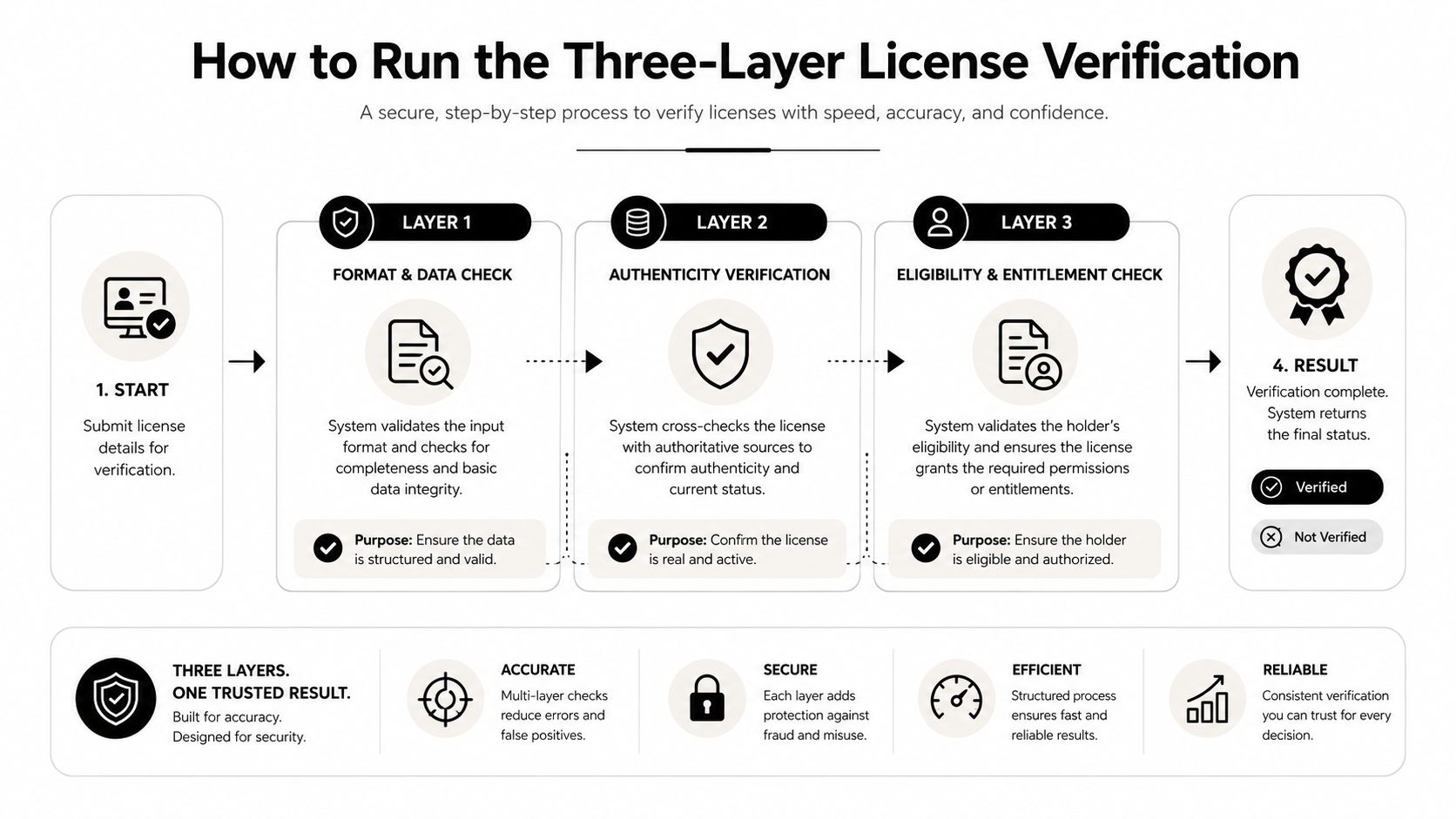
A search that stops at one portal can give you false confidence. A better check follows three layers, first the producer's identity, then the national record, then the state's own status and scope entry. That sequence helps you avoid mistaking a familiar name for actual authority to sell the policy in front of you.
Layer one, confirm the producer in the national registry
Start with the producer's full legal name or NPN in the NIPR record NIPR verification overview. This first pass works like a name tag at the front desk. It tells you whether you are looking at a real producer record, and it often helps when a person uses a business name that does not match the way they introduced themselves.
Pull the exact spelling, the NPN if it appears, and any clues about the states connected to the record. Use those details to narrow the next search. If the name is close but not exact, slow down and correct it before you move on.
Layer two, verify the state Department of Insurance record
Next, open the relevant state Department of Insurance portal and search by name, license number, or NPN, depending on what the site accepts. California's official lookup lets users search by license number or name and shows license details plus discipline history for multiple license types, including agents, brokers, adjusters, bail agents, and agencies or organizations California license status inquiry. This is the point where you check whether the national record matches the state record that controls the sale.
The state portal does the jurisdiction check. A producer can appear in a national registry and still lack the right state authorization for your purchase. Some portals also show how to search with multiple identifiers, which is why a clean match at this stage matters more than a casual name search.
Layer three, confirm the line of authority
The last layer is scope. You are looking for life authority, not just a general insurance label or another line of business. State records often separate active status from the specific product lines a producer can sell, and that wording matters because the wrong line can look acceptable at a glance while still failing the product test. New York's life-only and combined authority structure is a clear example of why the exact wording deserves attention New York life, accident, and health licensing requirements.
Ohio's public agent search also shows how a state lookup can surface status and scope details in one place Ohio agent search. Read both pieces together, the status and the authority, because one without the other does not tell you whether the producer can sell the policy you are considering.
That same habit is useful outside insurance too. People who trust verified home service pros already know that a polished profile is not the same thing as an official record. The state portal is the part that counts.
Short version: NPN tells you who the person is, the national registry helps confirm the baseline record, and the state portal shows whether that person can legally sell the policy you are considering.
Common fields on a state license lookup result
| Field | What It Shows | Why It Matters for Life Insurance | Example State Wording |
|---|---|---|---|
| Status | Whether the license is active, expired, or otherwise restricted | You should only proceed if the status is valid for the state where you are buying | State portals commonly show whether a record is Active |
| License type | The category of license the person holds | A general insurance license may not cover the exact product you want | California lists agents, brokers, adjusters, bail agents, and entities |
| Line of authority | The specific products the person can sell | Confirms life authority instead of another line | New York separates life-only from combined authority |
| Issue and expiration date | When the license started and when it ends | Helps you see whether the record is current | State portals commonly show issue and expiration fields |
| Appointments | Which carrier or entities the producer is appointed with, when published | Tells you whether the producer is aligned with the company being quoted | Some state systems publish appointment information |
| Discipline history | Public enforcement or disciplinary entries | Warns you about prior problems that may affect trust | California lets users check discipline history |
Reading the Lookup Results Like a Compliance Record
A clean lookup can still mislead if you stop at the word Active. Treat the result like a compliance file, not a simple yes-or-no answer. First confirm the state record, then check whether the line of authority matches the product, then look for appointments or disciplinary notes that change the meaning of the entry.
What each field is really telling you
Status tells you whether the license can be used right now in that state. If the portal says active, that is a good sign, but it does not answer whether the person can sell the specific product you are considering. Expiration date matters because a record can still be active and close to the end of its term, so the date should be read before you assume the authority will still be in place.
License type and line of authority are the fields people skip too quickly. A producer may hold an insurance license in general and still lack authority for the exact life product being discussed. New York's split between life-only and life, accident, and health authority shows why the wording has to be read carefully.
Appointments matter when the portal publishes them, because they can show whether the producer is tied to the carrier you are considering. That matters even more in online sales, where the buyer may never meet the producer in person. If the appointment is not shown, do not guess, ask the producer or the carrier.
Small wording differences can hide big differences
California, Illinois, and Ohio do not use the same labels, but they are pointing to the same basic questions. Is the license valid, is the scope correct, and is there anything in the public file that should change your mind? California makes discipline history visible, Illinois pushes users to confirm active status, and Ohio's search interface reflects the state-by-state differences buyers have to manage.
Read the full record, status, dates, scope, appointments, and discipline, before treating any result as complete.
Reading a lookup result the right way
- Check the jurisdiction first: make sure the record belongs to the state where you are buying.
- Check the status second: confirm it is active, not expired or inactive.
- Check the scope third: verify the line of authority includes life.
- Check the history last: scan discipline entries and linked entities before you move forward.
If the wording feels unfamiliar, that is normal. State portals are built for regulatory accuracy, not sales convenience, so the buyer has to read the record carefully.
Red Flags and Disciplinary History You Should Never Ignore
Some lookup results fail loudly, and some fail unnoticed. The unnoticed failures are the ones buyers miss, because the record can look acceptable until the details start to matter. A producer may be active in one state, missing life authority, or carrying a disciplinary record that changes the whole conversation.
The red flags that deserve a hard stop
A producer who is active somewhere else but not in the state where the policy will be sold is a problem. A license that is active but does not include life authority is also a problem, because the person may be licensed for a different line and still not be authorized for the product in front of you.
Another common issue is the partial-name search trap. If you search too loosely, you may find the wrong person or miss the right one, especially when multiple producers share a similar name. That is why a full legal name and NPN matter so much before you take the result at face value.
Don't confuse a familiar name with a verified authority. The portal is only useful if you confirm the jurisdiction, scope, and disciplinary history together.
How to react when something looks off
If the record is expired, suspended, or otherwise not active, stop the process until the producer gives you a current explanation and you independently confirm it with the state. If the discipline history shows an entry, read it instead of brushing past it. A public enforcement note is part of the record, not a side note.
Some state portals make the discipline section easier to find than others, but the point stays the same. Buyers should use the official portal, not a screenshot in a sales thread, because the state record is the source of truth. If a producer pushes back on that, treat the pushback itself as information.
What to Do When the Lookup Raises Questions
Real searches are messy. A name search can return multiple matches, no result at all, a producer who looks active but is not tied to the carrier you are quoting, or a disciplinary entry that needs context before you decide what to do next. Slow down and verify the right field instead of guessing harder.

Use a simple troubleshooting path
Start with the three-layer check again. Confirm the NPN, then confirm the national record in the NIPR portal, then open the state Department of Insurance record to check status and scope. If one layer looks off, the other two help you separate a bad search from a real licensing problem.
If you get multiple matches, ask the producer for the NPN and the full legal name as it appears on the license record. If you get no result, try the state portal again with the license number, then ask the producer to confirm the state where they are licensed. If the person is licensed but not appointed with the carrier being quoted, ask the carrier to confirm whether that producer can place the policy.
If the record shows a disciplinary entry, request the public disciplinary file or ask the state Department of Insurance how to read the entry. Many states also provide hotline support, and Texas, for example, directs consumers to its Help Line at 800-252-3439 for insurance questions on the Texas consumer help and hotline page. That is the kind of official path you want when the record raises more questions than it answers.
Escalate when the answer still isn't clear
If you still cannot resolve the mismatch, do not let the sale continue on momentum. Ask for written clarification from the producer, save screenshots of the lookup results, and bring in a licensed advisor in your home state if you need a second opinion. Remote sales make it easy to move fast, and that speed can hide a jurisdiction problem until after the application is already submitted.
A life insurance policy review checklist helps keep the final review organized before you sign. Use it to compare the license record, the carrier appointment, and the policy details side by side.
A Simple Verification Checklist Before You Sign Anything
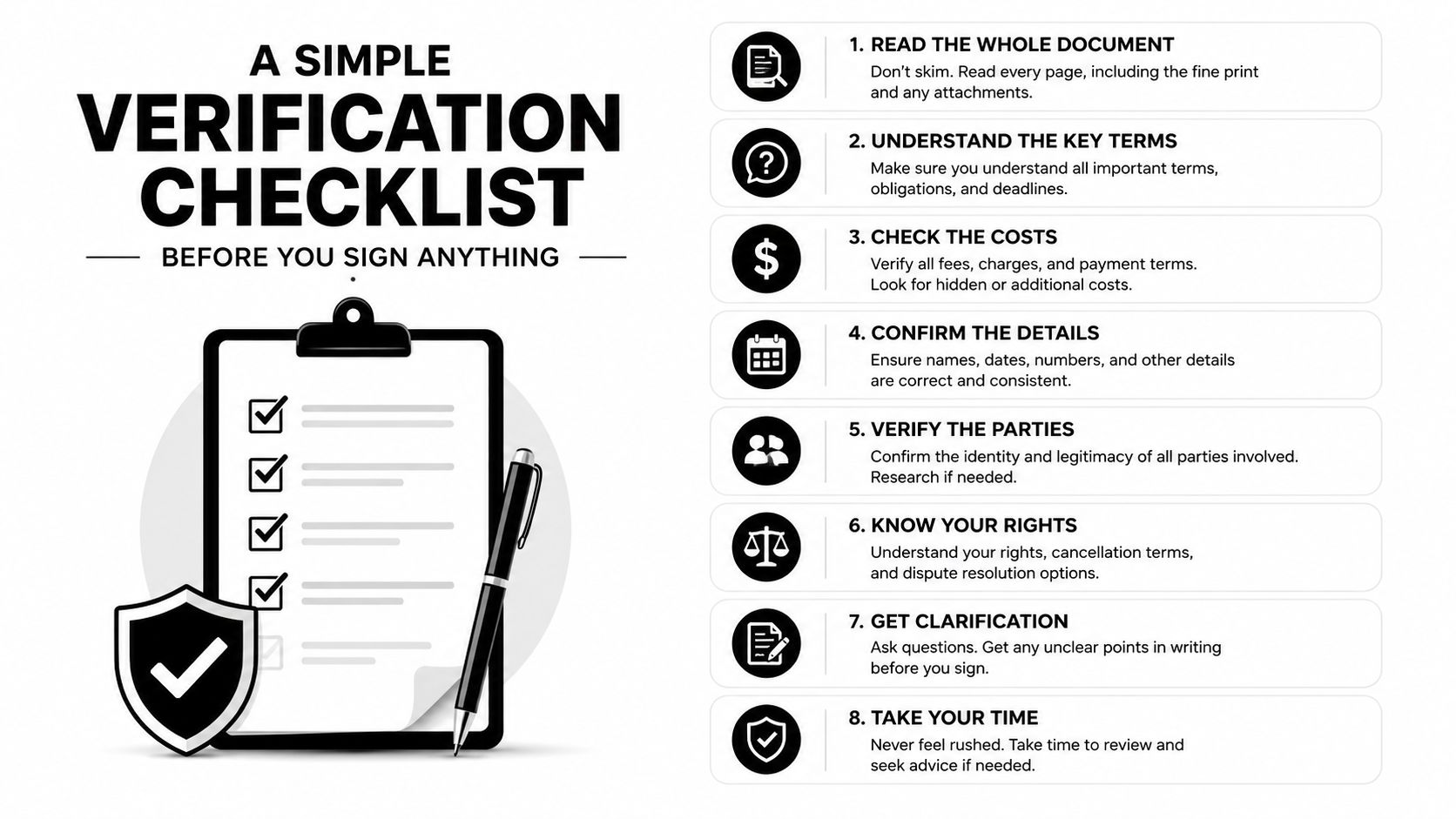
A life insurance lookup works best as a three-step check, not a single yes-or-no search. Start with the producer's full legal name, NPN, state license number if you have it, and the state where the policy will be sold. Then verify the national record, confirm the state Department of Insurance entry, and check the life line of authority and any discipline history.
If the producer is legitimate, those questions should not feel awkward. They should be able to give you the NPN without hesitation and explain the carrier appointment if you ask. Save screenshots of every result, because if a question comes up later, you will want the exact version of the record you saw before you bought.
A quick pre-signing habit
- Ask for the NPN: do not settle for just a first and last name.
- Match the state: confirm the record belongs where you are buying.
- Confirm life authority: do not assume a general insurance license is enough.
- Read discipline history: treat any entry as material.
- Save the proof: screenshots make follow-up easier.
- Review the policy details before you sign: use a life insurance policy review checklist to compare the license record, the carrier appointment, and the policy itself side by side.
A clean three-layer check does not take long, and it gives you something a quote page cannot, confidence in the person behind the policy. For young families, newly married couples, and busy professionals, that small bit of discipline often separates hoping a sale is legitimate from knowing it is. If you want a digital-first way to shop for coverage with the verification step still front and center, visit Coveredly and compare your options with a process that respects both speed and trust.