A lot of people search for answers about life insurance terminal illness after a doctor's appointment changes everything. One day you're talking about school pickups, mortgage payments, client deadlines, or summer plans. The next, you're trying to understand how to protect your spouse, your kids, and your own peace of mind while time suddenly feels very different.
In that moment, insurance language can feel cold and confusing. It doesn't have to. A terminal illness benefit is one of the few parts of a life insurance policy designed to help while you're still here, when money may be needed most for care, time off work, travel, comfort, or keeping the household steady.
Table of Contents
- Facing the Unthinkable with a Financial Lifeline
- What Is a Terminal Illness Benefit in Life Insurance
- How Terminal Illness Payouts Actually Work
- A Step-by-Step Guide to Filing a Claim
- Financial Implications for Your Family and Policy
- Alternatives and Strategic Planning
- Common Questions About Terminal Illness Benefits
Facing the Unthinkable with a Financial Lifeline
If you're reading this after a terminal diagnosis in your family, you're probably not looking for theory. You want to know what help is available, how fast it can happen, and whether taking that help could create more problems later.
That's why the terminal illness feature in life insurance matters so much. It can turn part of a future death benefit into money you can use now, during treatment decisions and family conversations, not only after a loss. For a young couple with a mortgage, or a parent trying to reduce stress at home, that shift can restore a sense of control.
People often miss this benefit because they assume life insurance only pays after death. In many policies, that isn't the full story. A terminal illness provision can provide access during life if the medical conditions in the contract are met.
Practical rule: When a policy includes a terminal illness benefit, the money isn't “extra.” It's early access to value that already exists inside the policy.
That distinction helps with one of the hardest emotional hurdles. Using the benefit doesn't mean giving up. It means using a tool you've already been paying for so your family has options.
Here's where readers usually get stuck:
- “Does this mean my family loses everything later?” Not necessarily. Some policies allow a partial advance, so a remaining death benefit may still be left for beneficiaries.
- “What if the doctors are wrong and I live longer?” This is one of the most important concerns, and there's an answer that brings real peace of mind.
- “Is this the same as critical illness insurance?” No. These are different benefits with different triggers.
The rest of this guide keeps things practical. You'll see what qualifies, how claims usually move, what happens to the policy, and how to compare this option with alternatives if your policy doesn't include the rider.
What Is a Terminal Illness Benefit in Life Insurance
A terminal illness benefit lets you access part of your life insurance payout while you are still alive if your policy's medical rules are met. In many contracts, this appears as an accelerated death benefit rider.
The key idea is simple. The benefit usually uses money from the same pool your beneficiaries would have received later. It changes timing, not the basic source of the funds. That detail helps families weigh a hard question with clearer eyes: do you use the policy now for care and stability, or preserve more of it for later?
Many people only notice the base policy and miss the add-ons that shape what the policy can do during a crisis. If you want a plain-English overview, this guide to common life insurance riders and what they add to a policy can help.
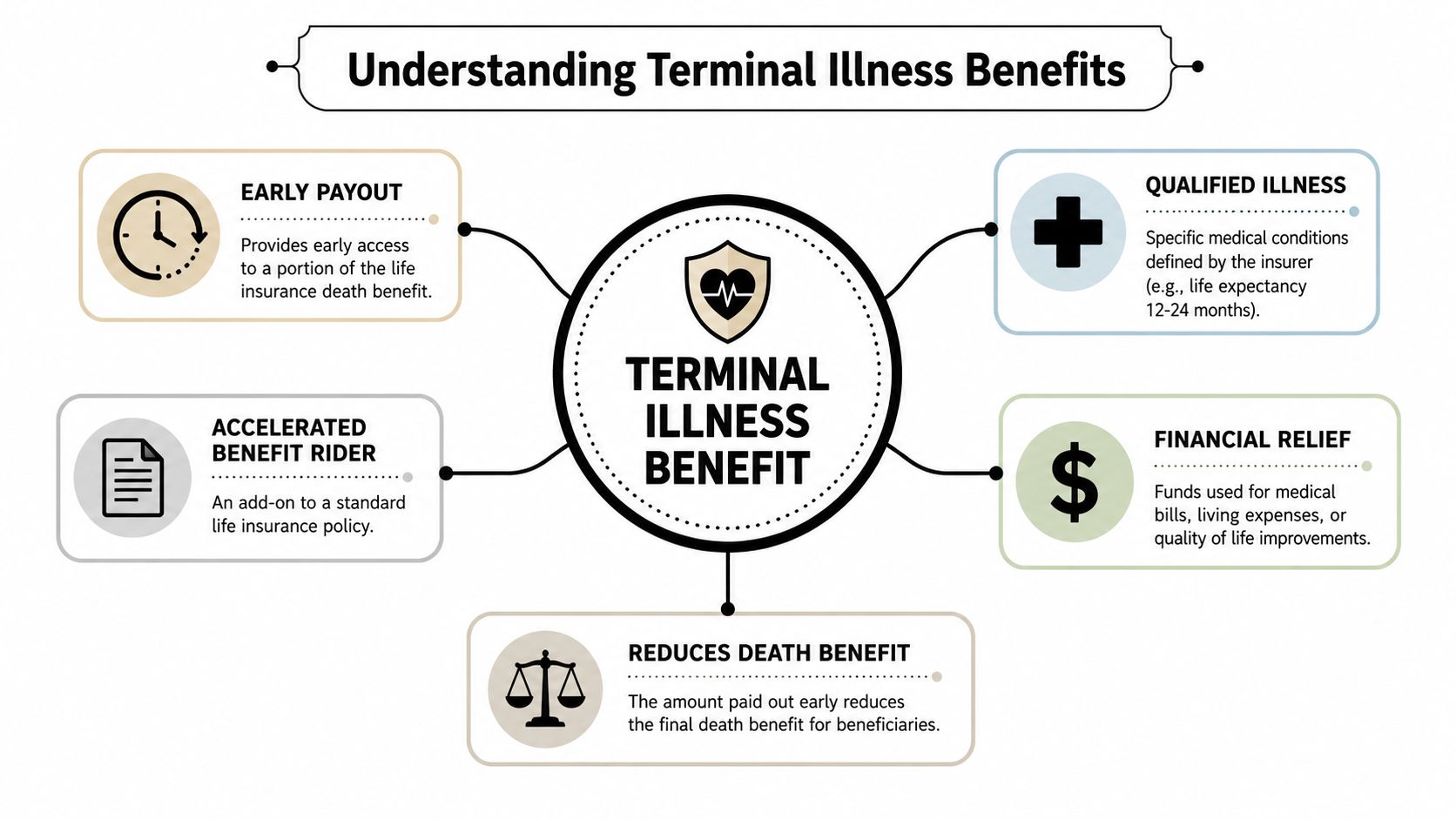
A practical point often gets lost here. With a terminal illness benefit, approved payouts generally do not have to be paid back just because someone lives longer than expected under the original prognosis. For families, that no clawback feature can bring real calm at a time when everything else feels uncertain. It also helps explain why some people prefer using the rider they already have instead of looking first at outside options such as a viatical settlement, where the trade-offs can be very different.
How insurers define terminal illness
Confusion usually starts with the word “terminal.” In everyday speech, it can mean a very serious illness. In a life insurance contract, it usually means a doctor has certified that the condition is incurable and that life expectancy falls within the time limit set by the policy.
“Terminal illness” in life insurance is technically defined as an incurable condition with a physician-certified prognosis of death within 6 to 12 months in the UK and Australia, or up to 24 months in U.S. accelerated death benefits, requiring dual medical certification where at least one practitioner is a specialist in the relevant field, according to Legal & General's explanation of critical versus terminal illness.
That narrower definition is why terminal illness cover and critical illness cover are different tools. A critical illness policy can pay for certain severe diagnoses even if treatment may still lead to recovery. A terminal illness benefit is tied to a much more specific medical prognosis.
A few points make the distinction easier to hold onto:
- Medical certification drives the decision: insurers usually want written proof from doctors, and one may need to be a specialist.
- The prognosis window matters: the diagnosis alone may not be enough if it does not fit the contract's time limit.
- The money is meant for real-life pressure points: treatment costs, debt payments, home support, lost income, or buying time and options.
For many families, the hardest part is not understanding the definition. It is understanding the trade-off. Using the benefit can reduce what loved ones receive later, but it may also prevent rushed borrowing, asset sales, or a discounted viatical deal. In that sense, the rider is not just a policy feature. It is a choice about where the policy can do the most good.
How Terminal Illness Payouts Actually Work
Once a terminal illness claim is approved, the insurer pays part or all of the death benefit early. The exact amount depends on the contract.
What you can usually access
Terminal illness benefits generally allow policyholders to receive between 50% and 100% of the total sum assured as an accelerated, tax-free lump sum paid during their lifetime, with the exact percentage depending on policy terms, according to MoneySuperMarket's guide to terminal illness cover.

If someone takes a full payout, the policy is usually considered satisfied and ends. If they take a partial payout, beneficiaries may still receive the remaining death benefit later. That trade-off matters a lot for families with children or shared debts, because it turns a personal care decision into a family planning decision too.
A simple way to think about it:
| Choice | What it can mean |
|---|---|
| Partial acceleration | Money now, plus some remaining death benefit later |
| Full acceleration | Maximum access now, but no death benefit left afterward |
That doesn't make one option better than the other. It means the right choice depends on what the household needs most now.
The no clawback reassurance
This is the part many people are afraid to ask about. They worry that if they receive an accelerated payout and live longer than the doctor first expected, the insurer will demand repayment. That fear keeps some families from using a benefit that could be a great help to them.
If you use an accelerated death benefit rider and survive longer than originally predicted, you generally don't owe the money back. As explained by Navy Mutual's discussion of terminal illness and life insurance, the financial risk of a longer-than-expected survival falls on the insurer, not the policyholder.
That “no clawback” point is more than a technical detail. It changes the emotional equation. It means a family can say yes to support without carrying a second burden of future debt or repayment anxiety.
Here's why that matters in real life:
- You can prioritize comfort: Families may choose home care, travel, or reduced work hours without fearing a later bill from the insurer.
- You can make decisions calmly: The benefit is easier to use when you know a longer survival period won't trigger repayment.
- You can focus on time, not second-guessing: Medical prognoses are not a financial trap for the insured.
For many people, this is the most overlooked source of peace of mind in the whole life insurance terminal illness conversation.
A Step-by-Step Guide to Filing a Claim
Paperwork can feel brutal when you're already managing appointments, medications, and difficult conversations. The good news is that the process is usually more straightforward when you break it into a few clear actions.
Start with the policy and the doctor
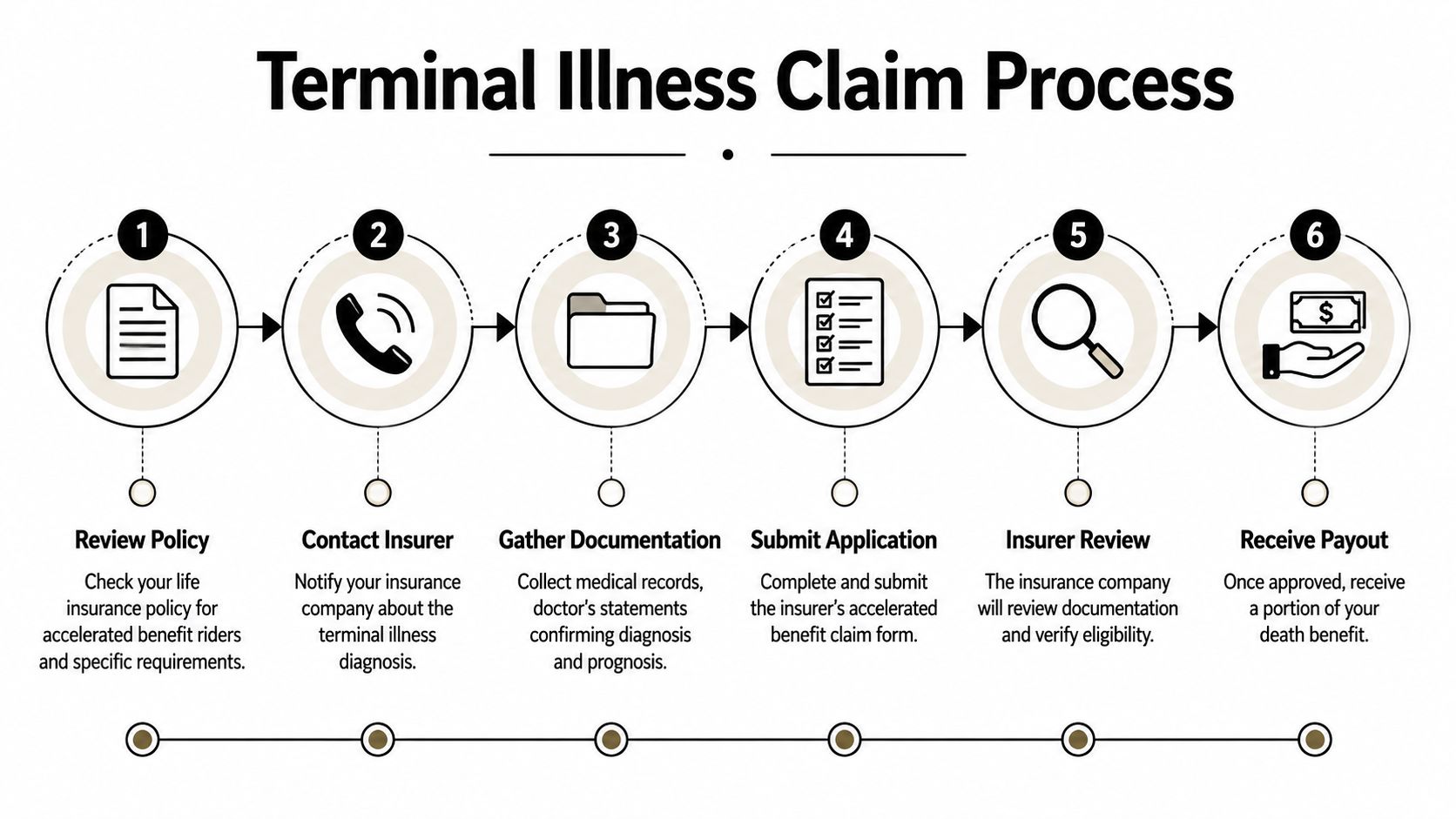
Before you call the insurer, pull the policy and check whether it includes a terminal illness or accelerated death benefit provision. If you want a practical walkthrough of the broader claim process, this life insurance claim guide can help you organize the basics.
One of the most widely used policy standards is very specific. The standard definition used by most UK life insurers requires a diagnosis by a registered specialist physician confirming the condition is expected to cause death within 12 months and that no curative treatment is available, and both criteria must be met, according to Global Investments' terminal illness benefit guide.
That gives you the first two tasks:
- Review the contract language. Look for terminal illness, accelerated death benefit, or rider wording.
- Request medical certification. Ask the treating physician and any required specialist what documents the insurer will likely need.
A short checklist can keep things manageable:
- Policy details: Find the policy number, owner name, and rider wording.
- Medical statement: Ask for written confirmation of diagnosis, prognosis, and treatment status.
- Claim forms: Request the insurer's terminal illness or accelerated benefit packet.
- Helper access: If a spouse, adult child, or attorney is helping, keep copies in one folder.
Later in the process, some families find it helpful to watch a visual overview before making calls or filling out forms. This short explainer can make the sequence easier to follow.
What happens after you submit
Once the forms and medical records are in, the insurer reviews them against the policy definition. That review usually focuses on diagnosis, prognosis, and whether the policy language has been met.
Keep notes of every call, every document sent, and every person you speak with. A simple dated log can save a lot of stress if the insurer asks for anything again.
Most claim delays come from missing forms, incomplete physician statements, or confusion about who needs to sign what. That's frustrating, but it's fixable.
If you're helping a spouse or parent, divide the work:
- One person handles medical documents
- Another handles insurance communication
- A third keeps a master folder with scans, dates, and next steps
That way, nobody is trying to remember everything from memory during an already exhausting time.
Financial Implications for Your Family and Policy
Using a terminal illness benefit changes the financial shape of the policy. That isn't bad. It just means the household needs to understand what shifts now and what remains later.
What changes for the policy
The biggest policy effect is straightforward. Any amount paid early reduces what can later be paid as a death benefit. If the full benefit is accelerated, the policy's job is done. If only part is accelerated, a reduced amount may still be available to beneficiaries.
This is one reason a terminal illness claim should be discussed like a family cash-flow decision, not just an insurance decision. A couple might choose a partial payout to preserve something for a surviving spouse. Another family may decide the need for care, travel, or household support right now matters more than preserving the full later benefit.
A few practical questions help frame the choice:
- What bills continue no matter what? Mortgage, rent, childcare, and debt payments often don't pause.
- What support will the family need later? A surviving partner may need a financial cushion after death.
- What does quality of life require now? Home modifications, caregiving, and reduced work hours can matter more than abstract future planning.
How families usually use the money
People often assume these funds are only for hospital bills. In reality, families may use them across a wider set of needs, such as replacing lost income, paying for travel to see relatives, arranging care, or making everyday life calmer and more manageable.
The financial scale of these claims is not small. In 2023, Aviva paid out more than £761 million on individual life insurance and terminal illness benefits across over 50,600 claims, according to Aviva's 2023 protection claims release.
That figure matters because it shows this benefit isn't a rare technical footnote. Insurers process large volumes of these claims, and families do rely on them.
A useful planning lens is to separate spending into three buckets:
| Bucket | What it might include |
|---|---|
| Immediate care | Treatment-related costs, caregiving, comfort measures |
| Household stability | Mortgage, rent, utilities, groceries, time off work |
| Family planning | Debt cleanup, legal help, support for a spouse or children |
Some policies also stop requiring further premiums after an accelerated benefit is paid, while others may handle policy status differently. Because that detail is contract-specific, it's worth asking the insurer directly before choosing a partial or full payout.
The key is to decide deliberately. A lump sum can create relief, but relief lasts longer when the family has a written plan for how the money will be used.
Alternatives and Strategic Planning
Not every policy has a terminal illness rider. Older coverage may be missing it, or the wording may be narrower than expected. When that happens, the best next step is comparison, not panic.
When an accelerated benefit makes more sense
If your policy includes an accelerated death benefit, that option often feels cleaner. You keep the policy relationship, you access money from your own coverage, and if you take only part of the benefit, there may still be something left for beneficiaries.
If you want a plain-language overview of how this feature works, this page on the accelerated benefit rider is worth reviewing.
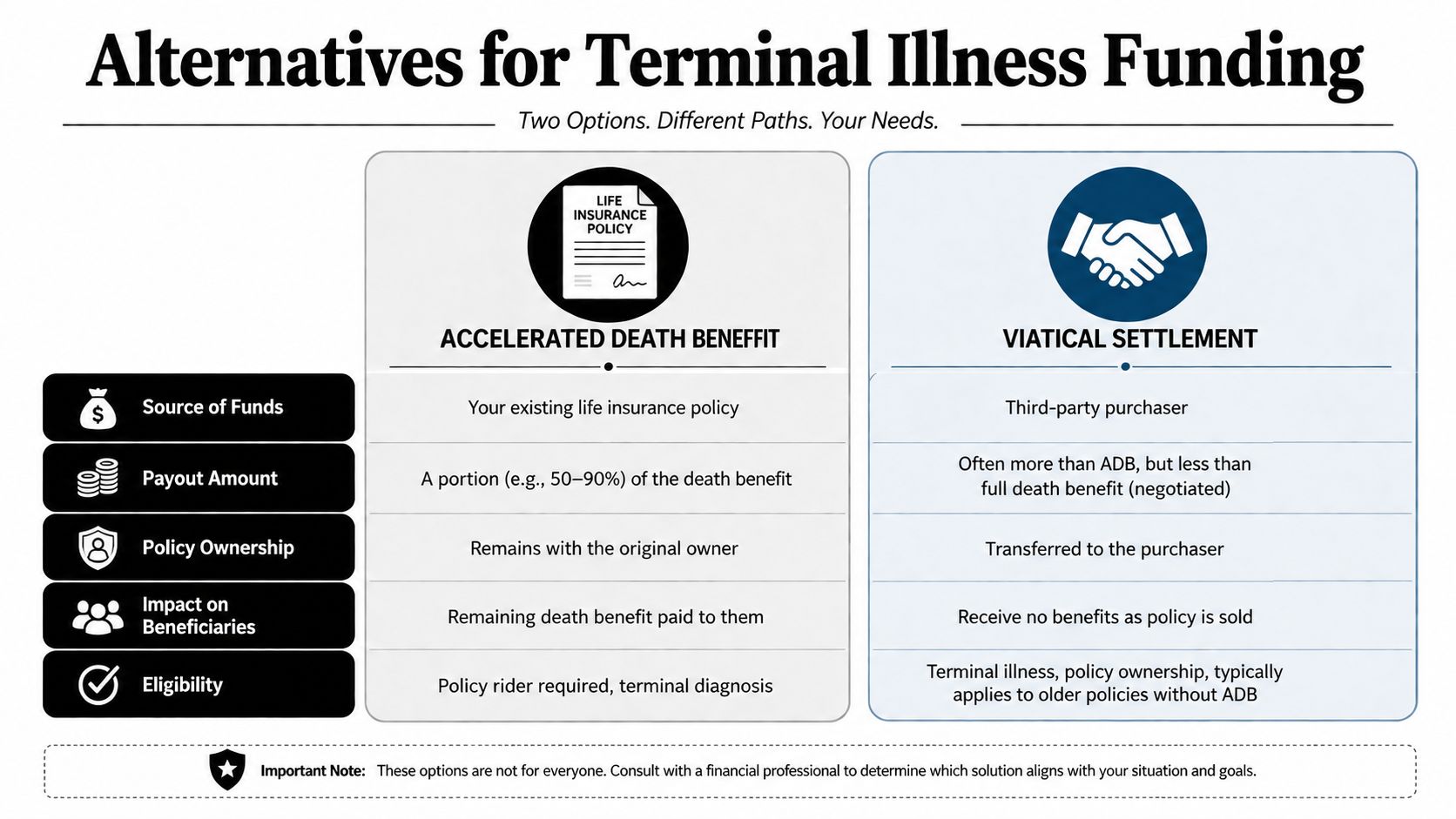
The practical strengths of an accelerated benefit are usually about control and simplicity:
- You keep ownership: The policy stays with you unless the full benefit is exhausted.
- The process is policy-based: You're working with the insurer under existing contract terms.
- Beneficiaries may still receive something: That matters for spouses, children, or business obligations.
When a viatical settlement deserves a closer look
A viatical settlement is different. Instead of drawing early from your death benefit, you sell the policy to a third party for a lump sum. The buyer becomes the new owner, pays future premiums, and later receives the death benefit.
Existing coverage often skips this comparison, but it matters. As explained in Fidelity Life's terminal illness rider discussion, ADB riders are often free or included, while viatical settlements can provide a lump sum for policyholders without the rider, but they permanently transfer ownership and premium responsibility to the buyer.
That creates a different set of trade-offs:
| Decision factor | Accelerated death benefit | Viatical settlement |
|---|---|---|
| Where money comes from | Your existing policy | A third-party purchaser |
| Who owns the policy after | You usually keep ownership | Buyer takes ownership |
| What beneficiaries receive later | Possibly a reduced benefit | Usually nothing from that policy |
| When it helps most | Rider is available | Rider is missing or unsuitable |
This is often the crossroads for families dealing with older term coverage. If there's no rider, a viatical settlement may be worth exploring. If there is a rider, the built-in option may offer more peace of mind and less disruption.
For the broader personal side of preparation, this complete guide to end-of-life planning can help families think through documents, caregiving, and conversations alongside insurance decisions.
Common Questions About Terminal Illness Benefits
Is terminal illness cover the same as critical illness cover
They solve different problems.
Critical illness cover usually pays if you are diagnosed with one of the specific conditions listed in the policy, such as certain cancers, heart attack, or stroke. Terminal illness benefits usually depend on a doctor confirming that an illness is incurable and meets the policy's life expectancy test.
A simple way to separate them is timing. Critical illness cover is meant to help during a serious medical crisis that you may live through for many years. Terminal illness benefits are designed for the stage when the policy allows access to the death benefit early.
Could using this benefit affect government assistance
Yes, it can.
A lump sum can change your savings, assets, or benefit eligibility, and the result depends on the program and where you live. That is why families should ask a benefits specialist, attorney, or financial adviser before the money arrives, not after. A little planning can help you avoid turning a helpful payout into an unexpected paperwork problem.
Can you buy new life insurance after a terminal diagnosis
Usually, no. New traditional coverage is often very hard to get after a terminal diagnosis, which is one reason an existing policy can matter so much.
That also helps explain why the no clawback feature brings real peace of mind. If your claim is approved under the policy terms, the accelerated benefit is generally paid from your own coverage, not as a loan that has to be repaid later because you lived longer than expected. Families often worry about that point. They picture the insurer coming back for the money if treatment works better than expected. In most cases, that is not how this benefit is structured, though the final answer always comes from your policy wording.
Another practical question sits underneath this one. Should you use the terminal illness benefit if you have it, or look at another option? Earlier in the article, we covered how viatical settlements can help when a rider is missing, but they usually involve giving up the policy and leaving little or nothing for beneficiaries from that coverage later. Using your own terminal illness benefit often preserves more control and creates fewer moving parts, even though it reduces what your family may receive at death.
Many advisers believe earlier access to funds matters significantly for families facing incurable illness, especially in situations such as advanced cancer. Your contract still controls the outcome, but the broader professional view reflects a practical truth. Money that arrives in time can pay for care, travel, housing changes, or reduce financial stress when your energy needs to go elsewhere.
If you want to review your options with a modern provider, Coveredly offers online life insurance built to be digital, flexible, and easier to fit into real life. It's a good place to explore coverage before a health crisis makes choices harder.