You've just had a baby, or maybe you've started a new role and your paychecks finally feel a little steadier. The next thought usually arrives fast, how much does it cost to protect the people who depend on you? That question leads straight to what is a life insurance premium, because the premium is the part most buyers see first, and the part that can be hardest to interpret.
For young families and busy professionals, the premium is more than a monthly bill. It affects whether coverage stays active, how flexible a policy feels, and whether a quote fits a real budget. The details matter because premium pricing is built from risk, time, and operating costs, not just a simple sticker price. Understanding that structure makes it easier to compare policies without guesswork.
Table of Contents
- Introduction to Life Insurance Premiums
- Understanding What a Life Insurance Premium Is
- Breaking Down Premium Components
- Factors That Affect Premium Pricing
- Comparing Term Life and Whole Life Premiums
- Example Premium Calculations and Cost Comparisons
- Actionable Strategies to Lower Your Premium
- Conclusion and Frequently Asked Questions
Introduction to Life Insurance Premiums
A new parent sits at the kitchen table after bedtime, laptop open, comparing quotes while a toddler's cup cools beside them. A manager in a new job does the same thing after a long commute, trying to decide whether the policy in front of them is affordable or just looks affordable at first glance. Both people are asking the same question in different ways, what is a life insurance premium, and why does it vary so much?
The answer shapes every other part of the buying process. A premium keeps the policy in force, but it also reflects how insurers price risk, how long the policy lasts, and how the company pays its own operating costs. That's why two people can look at the same face amount and still get very different numbers.
A clear grasp of premiums helps families compare quotes with less stress. It also helps professionals avoid the common mistake of focusing only on the monthly figure while missing the cost structure underneath.
Understanding What a Life Insurance Premium Is
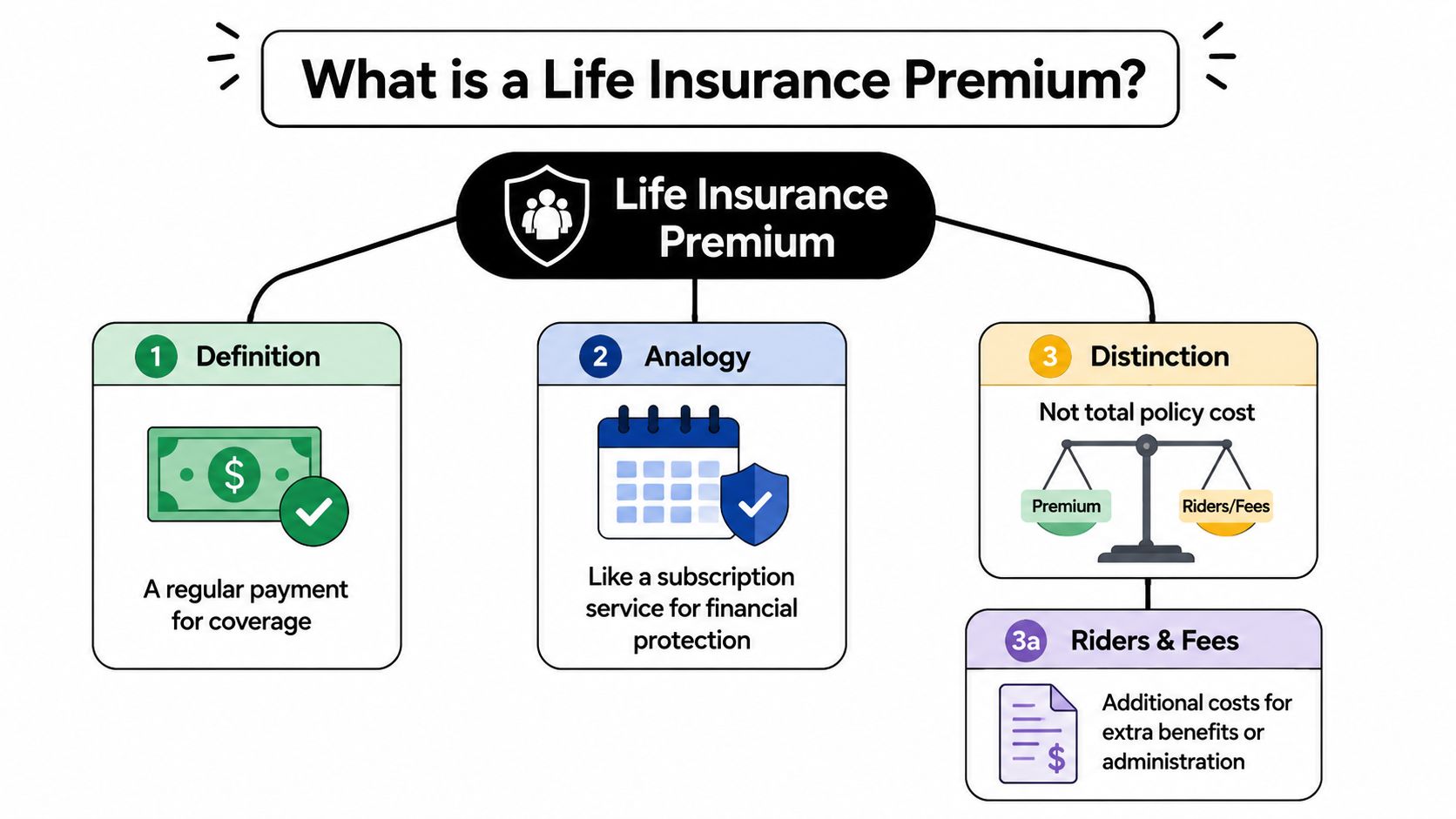
A life insurance premium is the recurring payment that keeps a policy active. If the premium is not paid, the policy can lapse, and the death benefit is no longer guaranteed. That is the basic exchange at the center of the contract, the insurer provides protection, and the policyholder keeps that protection in force through regular payment.
A premium works like a billing cycle
A premium functions like a billing cycle. You pay on a set schedule, and the coverage stays in place as long as the payment continues. In life insurance, the “service” is financial protection for your beneficiaries, and the premium is the payment that keeps that protection active.
That simple idea helps, but it can also hide other charges. Some policy explanations blend the premium with riders, fees, and cash value-related pieces in permanent insurance. The premium keeps coverage active, while the full policy cost can be higher depending on how the product is built. This distinction appears in the policy breakdown from Ethos.
Practical rule: if a quote looks cheap, check what is included before comparing it with another policy. A policy with extra riders can cost more than the headline premium suggests.
Why insurers structure it this way
The premium is more than a fee for coverage. It helps fund expected future claims, supports the insurer's administration, and covers operating costs. That logic shows up in actuarial teaching, where premiums are described as payments made in exchange for benefits, and traditional policies often use level payments over time. The number can feel personal, especially for young families and busy professionals comparing budgets, but the pricing logic behind it is highly systematic.
A practical example makes the difference easier to see. Two policies can both appear affordable at first glance, yet one may include only basic protection while another adds features that change the total cost over time. That is why careful buyers look past the monthly figure and ask what the premium is paying for.
Breaking Down Premium Components
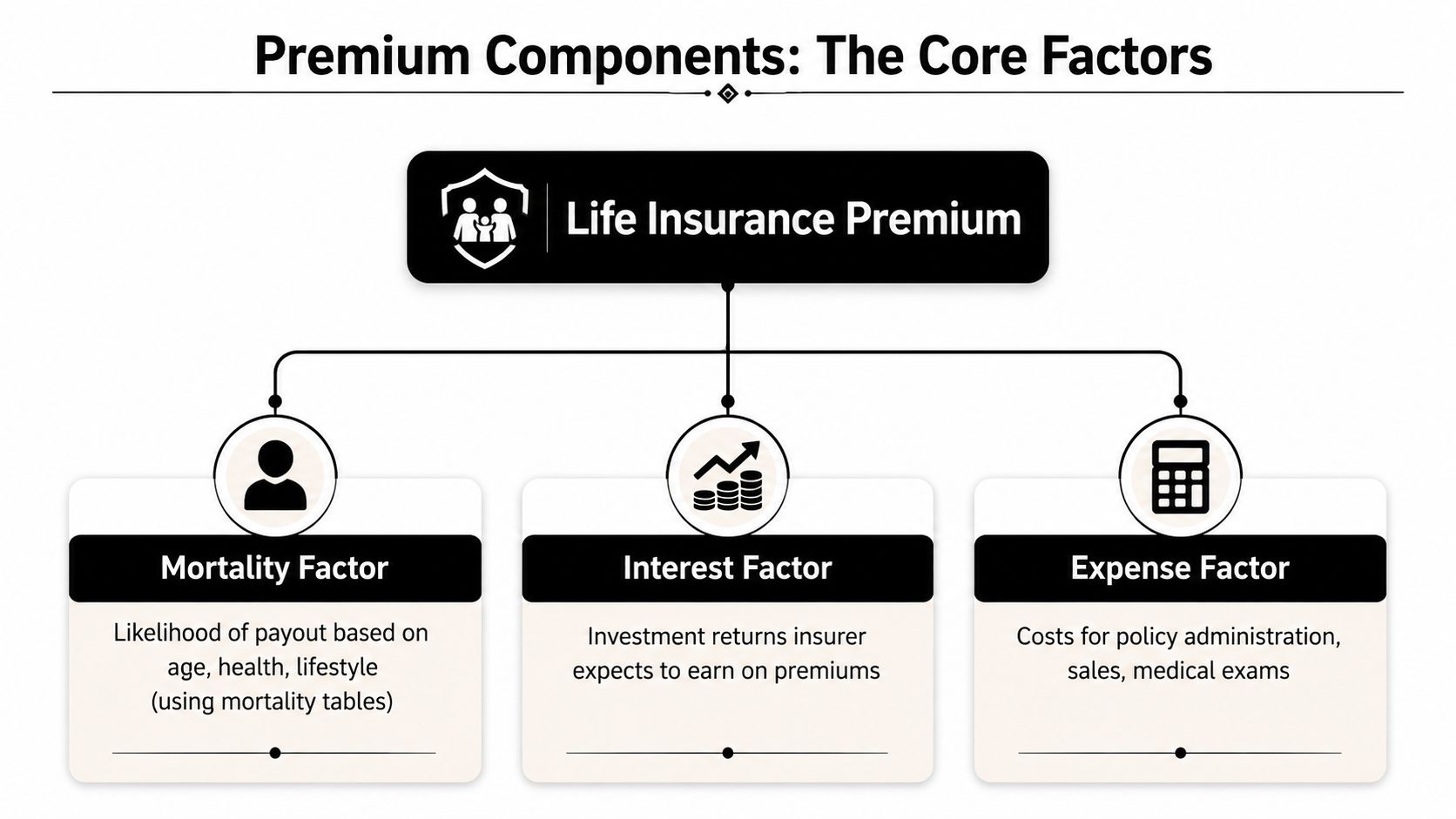
The pricing formula behind a premium usually comes down to three actuarial inputs: mortality, interest, and expense factor. New buyers often expect one simple reason for the price, but insurers are balancing several moving parts at once. The result is a payment that reflects both the likely claim and the business reality of running the policy.
Mortality, interest, and expense in plain English
Mortality is the likelihood the insurer will have to pay a claim. It's informed by life expectancy patterns and underwriting data, which is why age and health matter so much. Interest reflects what the insurer expects to earn by investing premium money before claims are paid. Expense factor covers the costs of doing business, including administration, selling policies, and handling claims. The New York Department of Financial Services explains this structure clearly.
Each part serves a different purpose. Mortality answers, “How likely is the payout?” Interest asks, “What can the insurer earn while holding the money?” Expense factor asks, “What does it cost to keep the policy running?”
Why the math feels hidden
Most policyholders only see one number, the premium. Underneath that number is a model that tries to keep the insurer solvent while keeping coverage available at a price people can afford. That's why premiums can differ so sharply for the same coverage amount.
A rider-heavy policy, for example, can cost more than a simpler policy because extra benefits add complexity. If you're comparing add-ons, the article on life insurance riders is a useful companion read. The main takeaway is simple, the premium reflects both protection and the machinery needed to deliver it.
Factors That Affect Premium Pricing
Insurers typically set premiums using age, health, lifestyle, policy type, coverage length, and riders, and they may let customers pay monthly, quarterly, annually, or as a one-time payment. That pricing framework is described in Fidelity Life's premium overview. The practical effect is that premium quotes reflect both who you are and how the policy is designed.
The personal risk profile
Age usually matters because risk changes over time. Health status matters because underwriting tries to estimate future claim likelihood. Lifestyle and occupation can matter too, especially when the policy includes more detailed underwriting. A desk worker, a self-employed contractor, and a frequent traveler may not all get the same quote even if they want the same coverage amount.
The payment schedule also matters. Annual, quarterly, and monthly billing can feel very different in real life, even before the policy itself changes. A larger upfront payment may be easier for someone with stable cash flow, while monthly billing may fit a household that needs more breathing room.
Policy design changes the bill too
Policy type, term length, and riders all affect the premium. A shorter term usually means a different pricing profile than a longer term because the insurer's risk window changes. Add-ons can raise the cost because they add benefits or extra administration.
A premium quote is a blend of personal risk and product structure, not a single “price for insurance.”
For buyers comparing policies with similar labels, the underwriting page on life insurance approval factors can help make sense of why one quote feels unusually high. The important point is that premiums aren't random. They follow the data insurers use to estimate risk and manage costs.
Comparing Term Life and Whole Life Premiums
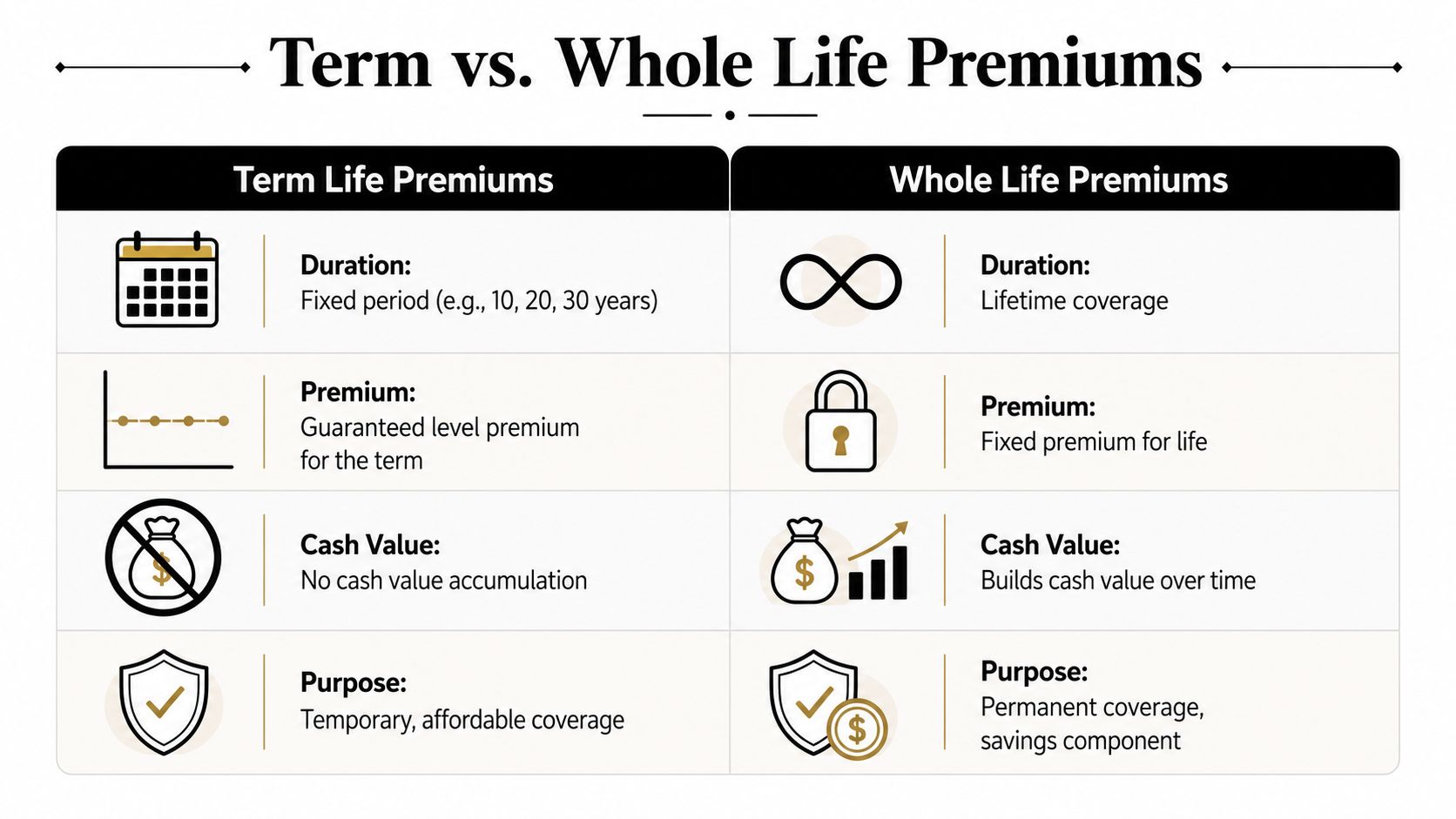
Term and whole life premiums can look similar at a glance, but they behave very differently over time. Term life is designed for a fixed period, while whole life is built for lifelong coverage. That difference shows up in the payment structure, the cost, and the way each policy supports a household plan.
Term life premiums
Term policies usually use a guaranteed level premium during the selected term. That makes budgeting easier, because the premium stays steady during that period as long as the policy is kept in force. Term life is also commonly used for temporary needs, like replacing income during the years a mortgage, childcare, or college savings matter most.
The broader cost picture matters here. Average term life costs are reported at roughly $40 to $55 per month overall, and for a $500,000, 20-year term policy, nonsmoker annual premiums vary widely by age and gender. ConsumerAffairs summarizes those ranges. For many young families, the appeal is straightforward, the coverage is often more affordable at the start.
Whole life premiums
Whole life policies usually use fixed premiums for life as long as the policy stays active. They also commonly include a cash value component, which is one reason the pricing works differently than term. That extra structure makes the policy more complex, and often more expensive upfront.
If you're deciding between the two, this term versus whole life comparison can help frame the tradeoff. Term life tends to emphasize affordability and simplicity. Whole life tends to emphasize permanence and added policy features. The better choice depends on whether your priority is temporary protection or lifelong coverage with more moving parts.
Example Premium Calculations and Cost Comparisons
A single number rarely tells the full story, so it helps to compare profiles instead of staring at a blank quote screen. Insurify reports that a $500,000 term policy may cost $10 to $200+ per month, depending on age, health, and term length. That range is useful as a reality check, especially for buyers who want to know whether a quote is in the normal zone.
Sample Monthly Premiums by Profile
| Profile | Coverage | Term | Monthly Cost |
|---|---|---|---|
| Healthy 30-year-old nonsmoker | $500,000 | 20 years | Within the lower part of the reported range |
| 40-year-old smoker in a manual-labor job | $500,000 | 20 years | Within the higher part of the reported range |
| 35-year-old with a moderate health history | $500,000 | 20 years | In the middle of the reported range |
The table is intentionally directional. The verified data gives a wide range, not exact quote-by-quote figures for these specific profiles, so the safest way to read it is as a comparison of relative position within the range.
How to read the quote
A healthy nonsmoker often falls closer to the lower end because mortality risk is lower. A smoker in a physically demanding job often lands higher because underwriting has more risk to price in. A buyer with a moderate health history usually sits between those two extremes.
The point isn't to chase the cheapest quote automatically. It's to see whether the quote matches the profile and the policy design. If a quote seems out of line, ask whether the coverage amount, term length, riders, or payment schedule is driving the difference.
Actionable Strategies to Lower Your Premium

The fastest way to lower a premium is to remove avoidable cost before you buy. That usually starts with a policy that matches your real need, not the largest face amount available. It also means thinking carefully about how much flexibility you want in the contract.
Choose the right term length. A term that matches your biggest financial obligations can keep the policy simpler than one stretched far beyond your needs.
Keep the rider list lean. Extra benefits can be useful, but each add-on can raise the total cost.
Pick the payment schedule that fits your cash flow. If annual billing is available and practical for your budget, it can simplify the experience compared with many smaller payments.
After you narrow the structure, focus on the parts insurers price. Health, lifestyle, and policy design all influence the quote, so the goal is to present the strongest clean profile you can.
- Review your underwriting details carefully. Small errors in health, occupation, or tobacco use can lead to a quote that doesn't reflect your real situation.
- Compare the total policy structure, not just the premium. A lower headline price can be offset by fees, riders, or a design that doesn't fit your family's timeline.
For young families, the smartest move is often simplicity. For professionals, the smart move is usually consistency, a policy that fits income patterns without creating future surprises.
Conclusion and Frequently Asked Questions
A life insurance premium is the payment that keeps coverage alive, but that simple definition hides a lot of important detail. It's built from actuarial assumptions, shaped by your personal risk profile, and influenced by policy structure. Once you understand that, quotes become easier to compare, and the difference between a policy's premium and its full cost becomes much clearer.
How should variable income affect my choice?
If your income changes from month to month, prioritize a premium you can pay comfortably in slower periods. A policy that feels affordable only in your best months can become a problem later if the premium is too tight.
Do career changes affect premiums?
They can, depending on how the insurer views your occupation and duties. A new role can change the risk picture, so it's worth checking whether a revised quote better matches your current work.
When does term conversion make sense?
Conversion can matter when you want permanent coverage but started with an affordable term policy. The key question is whether your family needs long-term protection beyond the original term window.
How soon should I apply?
Earlier is usually better because premiums are tied to risk factors that can change over time. If you know you need coverage, waiting often only gives insurers more reason to price higher.
The cleanest next step is to compare a few policy structures side by side, then choose the one that fits your budget and your family's timeline. If you want a modern way to do that, start with Coveredly and review your options before the next life change makes the decision harder.