You've just signed the mortgage, the keys are on the counter, and now a mailer or lender flyer is asking whether you want to “protect the home.” That's the moment many start hunting for mortgage protection insurance quotes, and it's also the moment they get sold a headline instead of a decision. A good quote should tell you more than the monthly premium. It should show whether you're buying the right kind of cover, whether the price matches your age and health, and whether a simpler term life policy would give your family more freedom for the same money.
Table of Contents
- What a Mortgage Protection Insurance Quote Actually Tells You
- Should You Even Get a Mortgage Protection Insurance Quote
- Information You Need Before You Request a Quote
- What Really Moves the Price in a Mortgage Protection Quote
- Requesting and Comparing Quotes Online With Coveredly
- Practical Ways to Lower Your Premium and Avoid Common Pitfalls
What a Mortgage Protection Insurance Quote Actually Tells You
You're at the kitchen table, half-finished coffee beside you, and the quote form asks for your mortgage balance, your age, your health history, and whether you smoke. That's not busywork. It's the insurer building a price for a very specific risk, not tossing out a standard rate card.
A mortgage protection insurance quote is a snapshot of what the insurer thinks it would cost to cover your remaining loan under the policy design you picked. In a real 2026 New Zealand comparison, the annual premium for a $500,000 mortgage ranged from $440.47 to $572.74 for a 35-year-old male, then rose to $1,293.59 to $1,536.59 for a 45-year-old male, $1,661.15 to $2,019.37 for a 40-year-old couple, and $4,549.55 to $4,886.57 for a 50-year-old smoking couple on the same loan size, with the same source noting an 8-week waiting period and a 2-year payment period MoneyHub. That spread tells you the quote is shaped by age, tobacco use, health, occupation, and benefit timing, not just the mortgage balance.
Read the quote as a decision tool
A quote is useful only if it shows what you're buying. If the policy pays the lender directly, shrinks over time, or comes with a limited payout window, the low premium may not mean strong value.
Practical rule: compare the benefit design first, then the price. A cheap quote that clears only part of the risk is still an incomplete answer.
If you want a cleaner way to think about the protection side of the decision, protect your home with life insurance gives you a useful framework for judging whether the policy is really protecting the family or just the loan. That distinction matters before you fill out a single form.
A smart quote tells you three things at once. It shows how much cover you're getting, how long it lasts, and how tightly it's tied to the mortgage. If it doesn't answer those questions, it's just a price tag.
Should You Even Get a Mortgage Protection Insurance Quote
The quote is a good starting point. I'd begin with the product choice. If the goal is to protect a family, not just satisfy a lender-shaped worry, level term life often does a better job.
Mortgage protection insurance is often tied to the outstanding mortgage balance and can decrease over time, while term life provides a lump sum the family can use for mortgage, childcare, debt, or income replacement Experian. That difference is bigger than most sales pages admit. With mortgage protection, the home gets paid off. With term life, your family gets options.
A simple family scenario
Think about a young couple with a new mortgage and a toddler. If one parent dies, the mortgage is only one of the bills that suddenly matters. Childcare, food, transport, and time off work don't disappear because the bank got paid.
If that couple buys mortgage protection insurance, they're solving one problem, the house payment. If they buy level term life instead, the beneficiary can use the payout for the mortgage, or for the mortgage plus all the other costs that come with raising a child on one income. That flexibility is the point.
When each product actually fits
Mortgage protection makes sense when the only goal is to clear the loan and nothing else. It can also appeal to buyers who want a narrow, mortgage-linked outcome and don't care about leaving cash to the family.
Term life is usually the better choice when the risk is broader than the house payment. If your family would need money for living expenses, debt, or childcare, a lump sum is far more useful than a shrinking balance tied to one bill. For a plain comparison of provider options, this mortgage protection insurance companies guide is a good place to evaluate how different carriers structure cover.
My view is blunt. If you're healthy enough to qualify for solid term pricing, start there. Only look at mortgage protection as the backup option, not the default.
Information You Need Before You Request a Quote
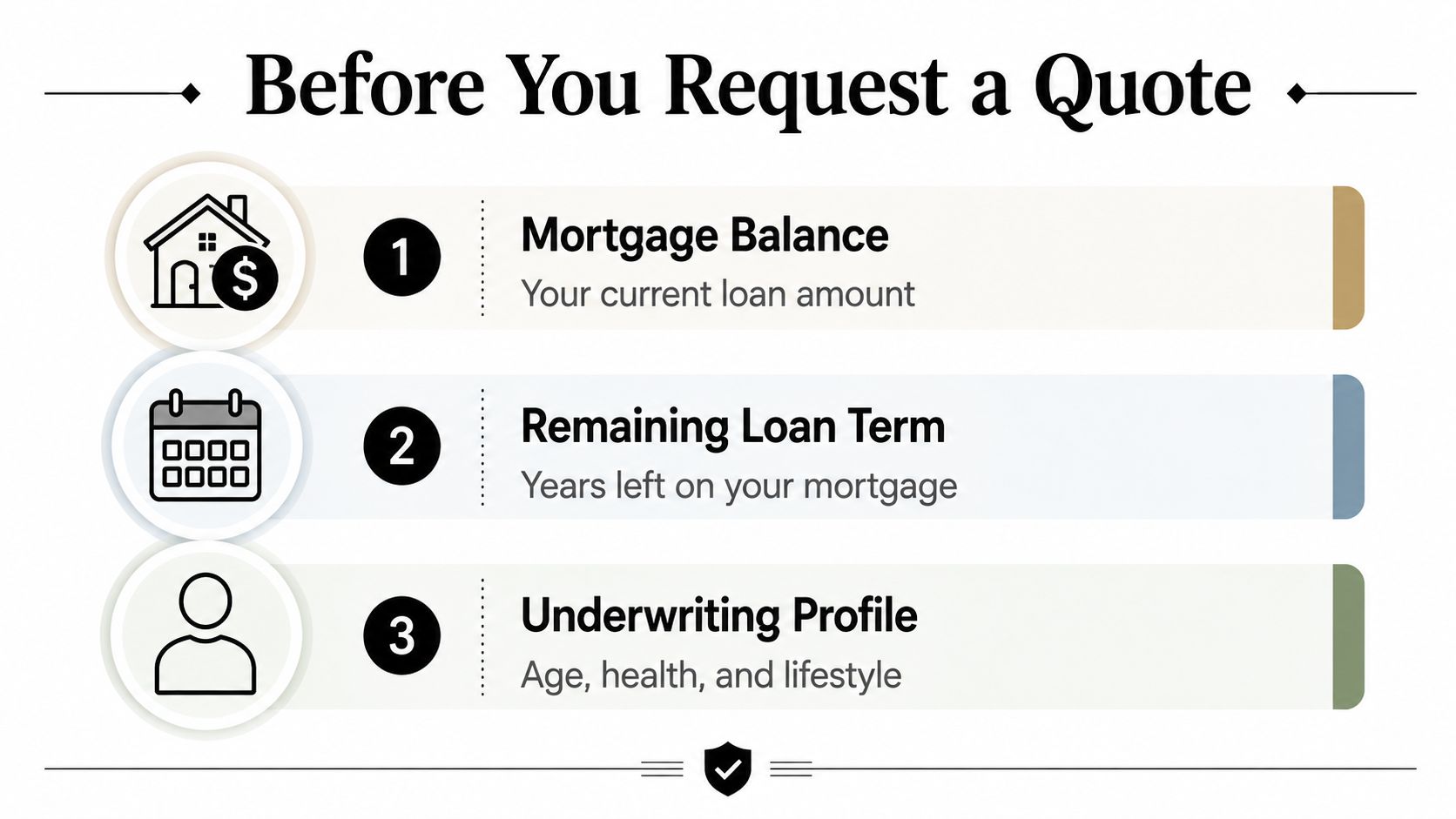
A bad quote starts with bad inputs. Mortgage protection quote engines are only as useful as the numbers you feed them, and the three inputs that matter are the current mortgage balance, the remaining loan term, and your underwriting profile, especially age, tobacco use, and major health disclosures.
The three inputs that matter
The mortgage balance tells the insurer how much cover the policy needs to clear. The remaining term shapes how long that exposure lasts. Your underwriting profile tells the insurer how risky you are to cover, and that is where age, tobacco use, and health disclosures come in.
Disclosure matters: minor health-inventory inaccuracies can raise the quoted premium by 20% to 30% LifeCare Benefit Services. That is not a small miss. It is the cost of being sloppy.
A quick worked example
Take a 35-year-old non-smoker with a $400,000 30-year mortgage. The quote engine starts by sizing cover to the mortgage, then layers on the applicant's age and health. If that same buyer shortens the term, leaves out a health detail, or changes tobacco status, the premium can move quickly because the policy is priced around repayment timing and personal risk, not just debt size.
If you want to prep properly, use the same level of paperwork you would bring to a closing review. A solid prepare for mortgage closing checklist keeps the loan facts straight so the insurance quote is not built on guesswork. For the underwriting side, a clear guide to life insurance underwriting helps you spot the health and lifestyle details carriers care about before you submit.
| Pre-Quote Information Checklist | Why It Matters | Where to Find It |
|---|---|---|
| Mortgage Balance | Sets the cover amount the policy needs to insure | Loan statement or lender portal |
| Remaining Loan Term | Shapes how long the cover should last | Mortgage contract or amortization schedule |
| Underwriting Profile | Affects premium through age, tobacco use, and health disclosures | Your own health and lifestyle records |
What to gather before you open a form
- Current loan statement, so you do not guess the balance.
- Mortgage term details, so the cover matches the loan.
- Health and tobacco history, so you do not have to backtrack later.
If you get these three inputs right, the quote has a chance of being useful. If you get them wrong, the number on the screen is just noise.
What Really Moves the Price in a Mortgage Protection Quote
The price swings are real, and they are usually not random. Insurers are pricing for age, tobacco use, term length, benefit design, and how long they expect to carry the risk. If you want a quote that means something, focus on those levers first, because that is where the money moves.
Age and tobacco are the bluntest levers
Independent calculator methodology says premiums can roughly double every eight to ten years of age, and tobacco use can approximately double the premium again Mortgage Protection Company. That is why a younger non-smoker and an older smoker can land on opposite ends of the pricing spectrum for the same mortgage.
A separate calculator shows a 10-year level term for $100,000 of coverage can be about $8.31/month at age 30, $15.31/month at age 50, and $81.90/month at age 70, with many buyers paying roughly $30 to $150/month overall Seniors Mutual. The point is not that every carrier prices the same way. The point is that age pressure is real, and it hits harder than many first-time buyers expect.
Term length changes the quote shape
The same calculator methodology says 10-year term pricing is about 55% of 30-year pricing, while 20-year term pricing is about 82%. Shorter terms usually cost less because the insurer is carrying the risk for less time.
That is why matching the term to the mortgage matters. If you are covering a loan that will likely end sooner, do not pay for more years than you need.
Benefit timing can matter more than buyers think
In the UK, mortgage payment protection insurance, or MPPI, usually pays a set monthly amount for up to 12 months or until the policyholder returns to work, whichever comes first Moneyfactscompare. That payout style is different from mortgage life cover because it is about keeping up repayments, not clearing the loan balance.
The headline premium means very little until you know whether the policy is designed to clear the mortgage, replace the payment for a short period, or do something in between.
Compare like with like
If one quote looks cheap, check whether the waiting period, payment period, and benefit structure are narrower than the other offers. A shorter benefit window can make the premium look better while reducing what the policy does for your family. For underwriting detail, this life insurance underwriting guide explains why insurers care so much about age, health, and disclosures.
Here is the straight answer. Younger, healthier, non-smoking buyers usually sit closer to the low end. Older applicants, smokers, and anyone with more complex underwriting land higher, sometimes sharply higher, even when the mortgage balance is identical. If your profile is borderline, do not shop on price alone. Compare the policy design first, then decide whether mortgage protection is the right buy or whether a level term life policy gives your family more flexibility for the same premium.
Requesting and Comparing Quotes Online With Coveredly
Open the form, enter your loan facts, answer the health questions plainly, and save every result. That sounds basic because it is. The skill is knowing what to ignore on first pass and what to record so you can compare quotes without getting distracted by shiny extras.

What to record from each quote
Write down the premium, the benefit amount, the waiting period, the payment period, and whether the policy can move with you if you change homes or lenders. Those terms often matter more than a small price difference.
If the quote includes optional riders, don't let them distort the first decision. First-pass shopping should focus on the core policy, because riders can make a quote look richer than it really is. You can always circle back to extras after you know the base price.
How to pressure-test a teaser rate
A suspiciously low quote usually has one of three issues. The benefit might be smaller than it looks, the payment period may be short, or the underwriting assumptions may be unusually favorable compared with your actual profile.
That's why I prefer comparing two or three quotes side by side. If the same mortgage request produces very different results, the cheapest one deserves the most scrutiny, not the least.
Here's the simple workflow I'd use.
Enter the same mortgage details everywhere.
Keep the loan balance and remaining term identical across requests.Disclose health history the same way each time.
Don't round off, soften, or omit. Sloppy disclosure pollutes the result.Save the fine print, not just the monthly figure.
Record waiting periods, benefit caps, and any payout limits.Compare it against level term.
Don't compare mortgage protection only with mortgage protection. Compare it against a standard term policy with the same starting coverage.
If you want to see how a digital quote flow works alongside traditional options, Coveredly's instant online life insurance quotes are a useful reference point for shoppers who want a fast comparison without a long sales call.
The right outcome isn't the cheapest number. It's the clearest tradeoff. If a quote looks simple but hides restrictive terms, move on.
Practical Ways to Lower Your Premium and Avoid Common Pitfalls
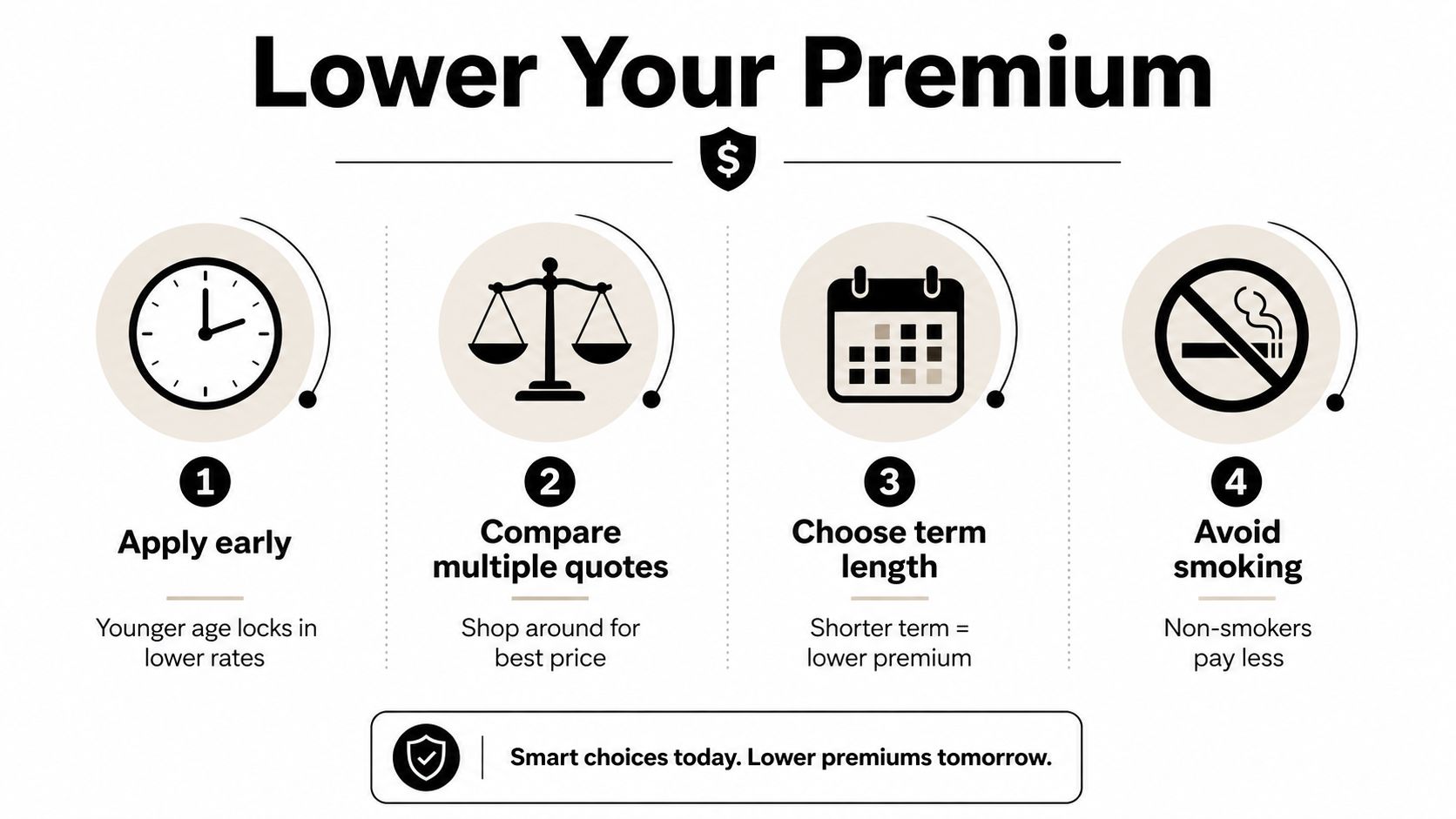
Want the cleanest path to a better premium? Apply sooner, match the term to the mortgage, and answer the health questions exactly as they are. That won't make every policy cheap, but it will stop you from paying extra for avoidable reasons.
The moves that usually help most
Apply early. Younger applicants usually lock in better pricing, and waiting six to twelve months can matter when age and underwriting are already working against you Pinnacle Quote.
Choose the right term. A shorter, matched term often costs less than over-insuring the timeline. Don't buy extra years you don't need.
Disclose health history cleanly. Sloppy answers can push a quote up or force a reset later. Precision saves time and money.
Compare against level term. If the family needs flexibility, a lump-sum policy may beat mortgage protection even when the headline premium is close.
Common mistakes that waste money
People chase the lowest teaser price and never check the waiting period. They accept the lender's offer because it feels convenient. They also wait too long after closing, then act surprised when the price reflects an older age or a more complicated health file.
Short checklist: match the term, compare the benefit, verify the payout rules, and never buy based on the monthly figure alone.
If you're going to print or screenshot one thing, make it this: buy the policy that solves the right problem, not the one that only looks cheapest at first glance.
Coveredly gives you a fast way to compare coverage, see how quote structure changes the cost, and decide whether mortgage protection or level term fits your family better. If you're ready to look at a cleaner online option, visit Coveredly and start with a quote that's built around the way you live.