You're comparing life insurance from your laptop, trying to see a real price before anyone gets your phone number. The moment a form asks for contact details, you hesitate. You don't want an agent calling during work, a stream of follow-ups, or a “quick conversation” before you've decided whether the coverage fits your family.
That concern is reasonable. Online life insurance quotes with no phone calls can give you privacy and control, but an anonymous estimate isn't always the same as a final policy offer. The important question isn't only whether you can avoid a call. It's whether the quote comes directly from a carrier, what information the insurer still needs, and how likely the displayed rate is to survive underwriting.
Table of Contents
- Why People Avoid Life Insurance Shopping
- What Information You Need Before Starting
- Finding True No-Phone-Call Quote Platforms
- Understanding No-Exam vs Fully Underwritten Policies
- Why Your Quoted Rate Might Change
- Completing Applications Without Phone Calls
Why People Avoid Life Insurance Shopping
Daniel, a young professional, delayed buying life insurance after his first child was born. He understood that his family relied on his income, yet every quote form requested his name, email address, and phone number. He expected sales representatives to call during meetings and ask whether he was ready to buy before he had compared coverage.
That concern is common. A LIMRA study cited in industry coverage found that 78% of shoppers avoided insurance quotes because they feared aggressive sales calls, while 62% said unwanted follow-ups deterred them. Privacy-first quote tools meet that need by letting families research independently and decide when advice becomes useful. The goal is control, not isolation.
Digital shopping has changed the first step
LIMRA reported that online shopping among recent life insurance buyers increased from 30% in 2017 to 44% in 2022 (LIMRA market coverage). Its 2024 Barometer infographic showed consumer preference for buying online rising from 31% in 2022 to 32% in 2023, while preference for in-person buying fell from 33% to 29%.
LIMRA also notes that virtually all recent buyers of individual life insurance start or complete applications online. A digital quote can therefore be the first stage of a larger process, including coverage comparisons, payment details, and application questions.
That does not make every online quote a final offer. A platform may show an anonymous estimate, then request personal and medical information before an insurer issues a policy. Phone calls are optional during early research when the platform provides clear inputs and privacy terms. They can become required when an insurer needs clarification, verifies application details, or completes underwriting. Rates may also change because the initial quote uses limited information, while underwriting reviews health history and other risk factors.
Practical rule: Check whether the estimate is anonymous, who provides it, and which steps may require contact before entering your phone number.
Digital self-service suits shoppers seeking straightforward term insurance for income replacement. People considering estate planning, business succession, or coverage affected by unusual medical histories may benefit from personal guidance, but that guidance should be available by choice rather than imposed at the quote screen.
For a plain-language explanation of policy types and beneficiaries, Wealth Collective explains life insurance offers a useful starting resource. Read it before requesting quotes if you are still deciding what the policy must accomplish.
What Information You Need Before Starting
A reliable preliminary quote starts with accurate inputs, not your phone number. Prepare the details that influence underwriting, then review the platform's privacy terms before sharing contact information.
Start with the core quote inputs
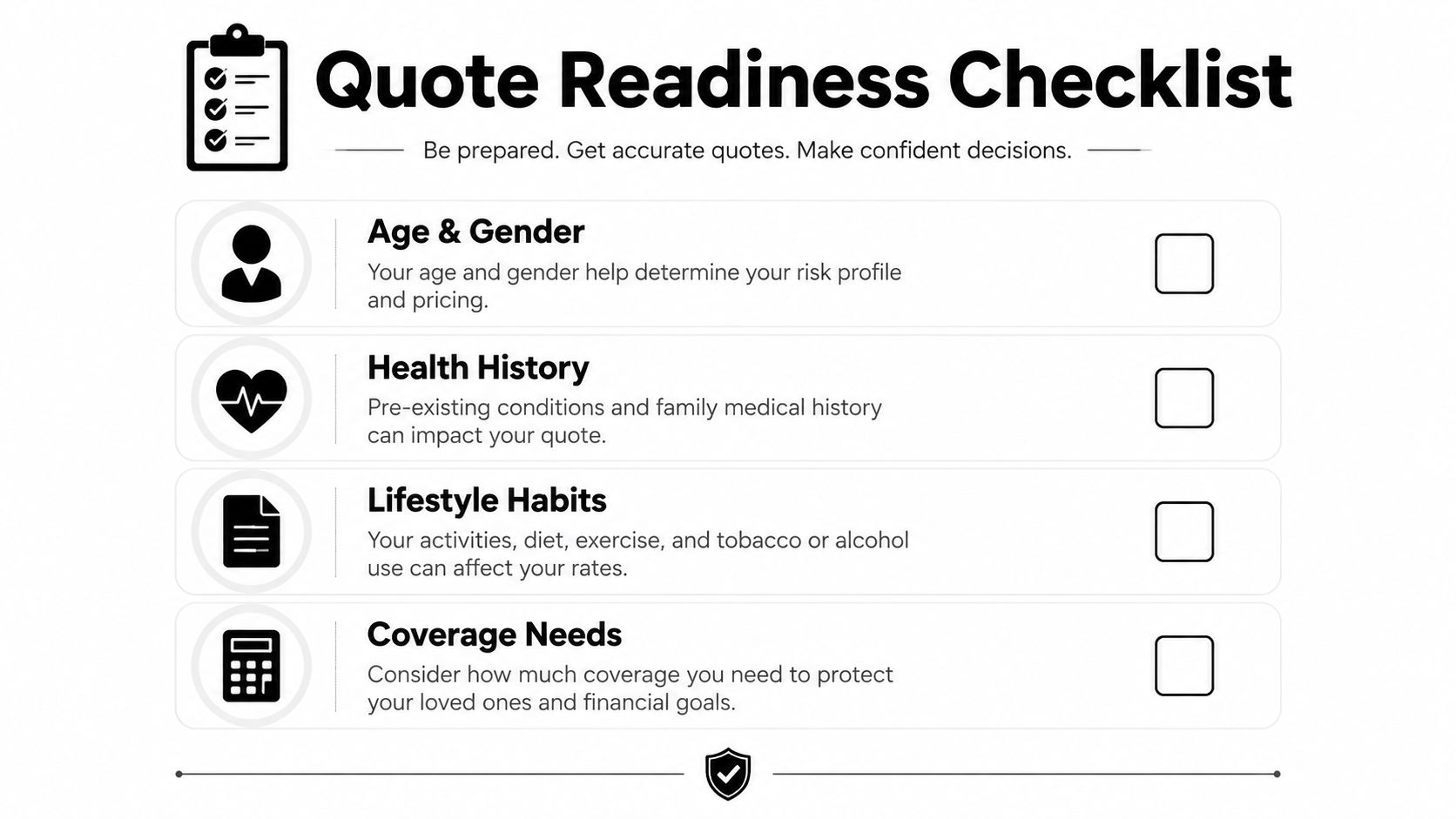
Have these answers ready:
- Age and gender: The tool uses them to create an initial pricing profile.
- Coverage amount: Set the protection your family may need for income replacement, debts, or other obligations.
- Term length: Compare the same coverage across different policy durations.
- Tobacco use: State whether you use tobacco and how recently.
- Basic health details: Prepare information about major diagnoses, medications, height, weight, and relevant medical history.
Some platforms offer anonymous quote flows without requesting a name, email, or phone number (anonymous quote options). Choose that format when you are comparing options and are not ready to start an application.
Prepare health information without oversharing
You do not need your complete medical file for an initial estimate. Write down treated conditions, current medications, approximate dates of major procedures, and doctors or facilities, if known. Accurate answers matter at every stage. Guessing can create trouble later if the insurer checks your records during underwriting.
Provider information can slow an application. 56% of applicants cited difficulty gathering healthcare-provider information, while 60% cited having to enter medical details as reasons for abandoning the process (LexisNexis consumer research). Gather the information you can, but do not submit unnecessary medical details to view an estimate.
The quote is only an early indication. A carrier may later require more information, clarify an answer, or request a phone conversation before issuing coverage. That is the trust gap between an anonymous estimate and a final policy. A no-call quote platform can reduce early friction, but it cannot bypass requirements tied to identity verification or underwriting.
Protect your privacy deliberately
Read what the platform stores, who receives it, and whether submission authorizes calls, texts, or emails. If a “see rate” button stays disabled until you provide a phone number, treat the site as a lead-generation funnel rather than an anonymous quote tool.
Use this sequence:
- Review the privacy language before submitting anything.
- Enter only the minimum quote fields needed for an estimate.
- Save the quote assumptions, including coverage amount, term, tobacco answer, and health responses.
- Confirm the carrier and underwriting conditions before applying.
- Share contact details only when you accept application communications.
Finding True No-Phone-Call Quote Platforms
A “no phone calls” promise can end at the first quote screen. Some platforms provide an estimate and let you continue online. Others collect your identity, sell the lead to an agent, and use the estimate to begin a sales process. The practical question is not whether the first screen avoids a call. It is whether the insurer lets you reach application and issuance without speaking to anyone.
Inspect the form before entering personal data. A genuine anonymous quote tool may request age, gender, coverage amount, term, tobacco use, and basic health information. A lead-generation platform commonly requires your name, email, phone number, state, and consent to contact you before showing meaningful results.
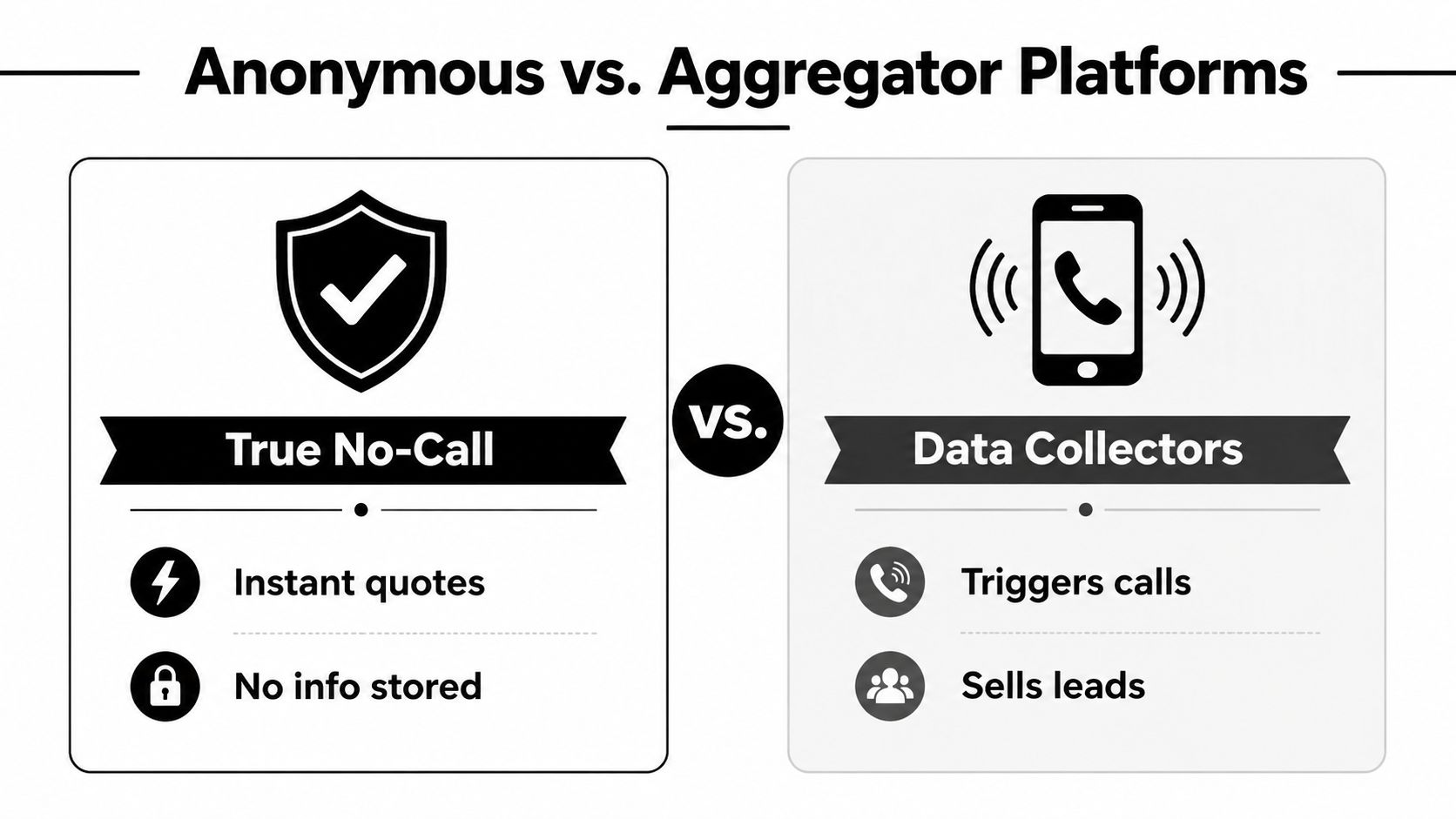
What a credible platform should show
Check four signals:
- A visible estimate before contact capture: You should see a price range or carrier result without agreeing to a callback.
- Clear insurer identification: The page should state whether the result comes from a carrier, independent agency, or comparison marketplace.
- A transparent privacy notice: Confirm whether your information may go to agents, partners, or marketing providers.
- A defined next step: The platform should distinguish an estimate from prequalification or a formal application.
Instant quote examples show how some services present real-time or side-by-side rates, with flows that may take under thirty seconds to a few minutes. Speed helps, but it does not make the number a binding offer. The rate still depends on accurate answers and the insurer's later underwriting review.
Red flags that should stop you
Stop if the platform hides the carrier, promises approval without asking health questions, or displays an unusually low teaser rate without its assumptions. Read the consent language closely. It may authorize automated calls or texts even when the page emphasizes online convenience.
You can learn more about privacy tools and private-number options through Gini Help's guide to private-number apps, but using a separate number should not be necessary to obtain a transparent quote.
A quote tool can also push you into an application faster than expected. Analysts found that 43% of life insurance quote tools still linked directly to an online application from the results page in 2026 (online quote journey analysis). Before selecting “apply,” confirm what information the next screen requests, who receives it, and whether the carrier may require a call later.
Review instant online life insurance quotes as a comparison-focused option, then check how clearly it explains the move from quote to application. A phone-free estimate is useful. Final policy issuance may still require identity verification, clarification, or underwriting contact, and quoted rates often change when the insurer reviews the full application.
Understanding No-Exam vs Fully Underwritten Policies
If you want coverage without scheduling a medical appointment, a no-exam policy may fit. You answer health questions online, receive an automated decision when eligible, and complete the purchase digitally. Products such as this digital application example show how applicants can move from online questions to a rate and coverage activation without an exam.
The convenience has a boundary. No-exam underwriting relies on your application answers and permitted data sources. If your health history, coverage request, or other details fall outside the insurer's automated rules, the carrier may request records, an exam, or contact with an underwriter.
No-exam policies fit a specific buyer
Choose this route when speed matters, your needs fit a standard term policy, and you can answer health questions accurately without additional explanation. It works well for families and professionals who want income protection without arranging an appointment.
Review the limits before choosing it. Higher coverage amounts and more complex policies can require further underwriting or human contact, as these online policy limitations explain. Avoiding a phone call is not a good reason to buy less coverage than your dependents need.
Fully underwritten policies take more work
Traditional underwriting can include a medical exam, medical records, prescription checks, and a detailed review of your health. McKinsey reports that some digital models complete underwriting within minutes, with fewer than 5% of applications requiring human touch (McKinsey underwriting analysis). That supports digital processing at scale, but it does not guarantee an automated decision for every applicant.
Fully underwritten coverage may provide better pricing or broader limits when the carrier can evaluate your health in greater detail. The process can still take 2–6 weeks, even if the initial quote appears instantly. If you are healthy and have no urgent deadline, answering more questions and completing an exam can be financially sensible. This guide to life insurance medical exams explains what that appointment may involve.
| Path | Main advantage | Main trade-off |
|---|---|---|
| No exam | Fast, digital application and less scheduling | Eligibility and coverage can be limited |
| Fully underwritten | Deeper risk review and potential long-term savings | More questions, records, and possible medical requirements |
McKinsey also found that 36% of applicants who completed the process identified application time as an issue. Among those who considered the time unacceptable, 91% said it harmed overall satisfaction. The practical standard is simple: choose the process that gathers enough information for a reliable decision without making you repeat it unnecessarily.
Phone-free quoting is useful at the estimate stage. Final issuance is different. The carrier may still need identity verification, records, clarification, or an underwriter's review before it will bind coverage. Choose no-exam insurance for a suitable balance of speed and fit, not because the label promises a completely contactless purchase.
Why Your Quoted Rate Might Change
The rate shown on a quote page is usually an estimate, not a promise that the insurer will issue the policy at that price. The system relies on the information you enter. Later, underwriters may verify your health history, prescriptions, tobacco use, medical records, build, and other risk factors before assigning a final rate class.
That process creates a trust gap between anonymous quoting and policy issuance. A platform can display an attractive estimate after asking only a few questions, then revise the offer when the full application reveals details the initial form did not capture. The carrier may be following its underwriting rules, but the quote page should make that limitation clear.
Estimates and final offers are different
A preliminary quote assumes your answers are complete and accurate. A final offer reflects the insurer's underwriting decision. A diagnosis, medication, tobacco history, or other medical detail can change your risk classification. The result may be a higher premium, reduced coverage, or additional review.
For the same coverage, the difference between an initial quote and the issued policy can reach 30–50%, according to insurance comparison analysis. Do not build a household budget around the first number until you know whether it is only an estimate or an offer ready for acceptance.
Ask before applying: “Is this rate carrier-generated, and what specific events could change it after underwriting?”
A no-phone quote can be useful for comparing options. It does not guarantee that final issuance will remain phone-free or that the price will stay unchanged. Calls become optional when the carrier can verify identity, collect documents, and resolve questions digitally. They may become required when an underwriter needs clarification or the application falls outside the platform's automated rules.
The application can expose hidden friction
Required effort and time are common reasons applicants abandon an application, according to consumer research cited earlier. A strong quote journey should provide enough information for an informed comparison without demanding every detail immediately. It should also explain why later questions, records, or verification steps are necessary.
Answer every health question consistently. Do not minimize a diagnosis to protect a lower estimate, or select “no tobacco” when the question covers a period in which you used tobacco. An inaccurate application can create serious problems during claim review.
Before accepting a final offer, compare its assumptions with the policy documents. Confirm the insured amount, term, premium, exclusions, riders, payment schedule, and rate class. If the offer changes, request the underwriting reason in writing. Then compare another carrier instead of accepting the revision automatically.
Completing Applications Without Phone Calls
A phone-free quote is useful only if the application preserves your control. Start by confirming that the insurer supports electronic signatures, online identity verification, secure document uploads, and email-based status updates. A platform that shows an anonymous estimate but requires a call to proceed isn't a fully digital purchase path, and it should say so upfront.
Follow a controlled application process
- Capture the quote details. Save the insurer, product type, coverage amount, term, estimated premium, and assumptions used.
- Read the consent language. Look for authorization to call, text, or share your information with agents and marketing partners.
- Verify the carrier. Check that the application identifies the actual insurance company, not only a comparison brand.
- Answer health questions completely. Use prescription records and provider information where requested.
- Review the final offer. Compare every material term with the original estimate before signing.
- Store the issued policy. Download the policy contract, confirmation, payment record, and instructions for beneficiaries.
Many digital providers can move from online questions to an instant rate and policy activation for eligible applicants. But a medical exam, records request, identity problem, unusually high coverage amount, or complex policy design can trigger additional review. In those cases, phone contact may become necessary, although you can ask whether email or secure messaging is available instead.
For families who want a digital purchasing route, direct-to-consumer life insurance explains the model and the kind of online journey to expect. Treat the absence of a call as a convenience, not as proof that the policy is suitable.
Your best protection is documentation. Keep screenshots of the estimate, copies of your answers, the privacy notice, and the final policy offer. If the price changes, you'll have a clear record of what the insurer originally asked and what it ultimately approved.
Coveredly offers a digital term life insurance quote experience with up to $3 million in coverage and no exam for most applicants, depending on eligibility. If you want to compare coverage without starting with a sales call, visit Coveredly and review your personalized options online.